
Google’s SynthID AI Detector is Now Freely Available to Everyone
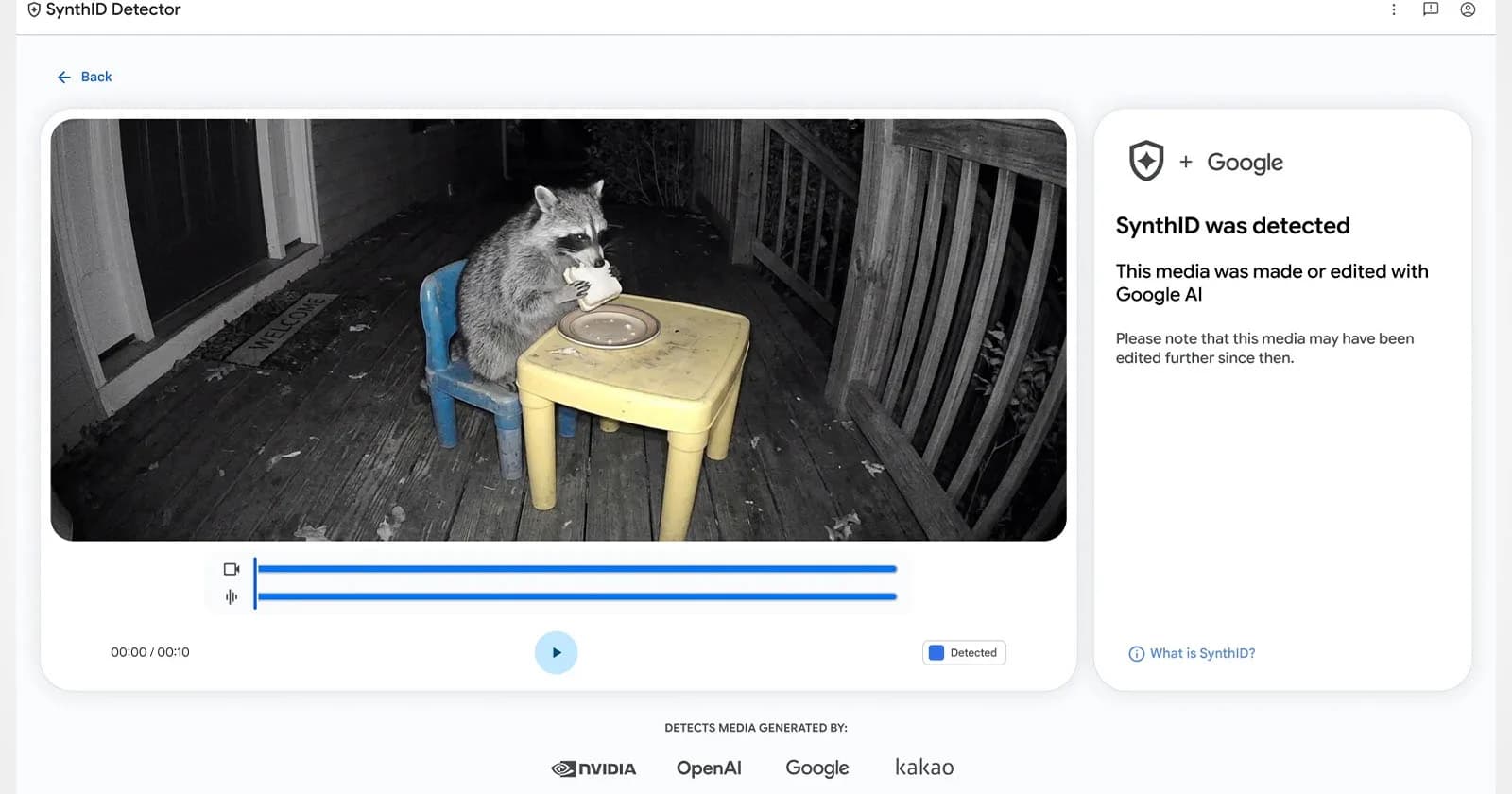
Google has made SynthID Detector publicly available, allowing any user to upload images, videos, or audio clips and check whether they contain watermarks associated with generative AI tools. The tool was previously restricted to vetted partners and developers working within Google's ecosystem, so opening it to the general public represents a meaningful expansion of its reach.
SynthID is Google's watermarking system, developed by Google DeepMind, designed to embed imperceptible signals directly into AI-generated content at the point of creation. Unlike visible watermarks or metadata tags - which can be stripped with basic editing tools - SynthID embeds its signal into the content itself, making it more resilient to cropping, compression, and color adjustments. The detector works by reading those embedded signals and returning a result indicating whether a watermark is present and, if so, how confident the system is in that finding.
It is worth noting what SynthID can and cannot do. The tool is specifically trained to detect watermarks placed by Google's own generative AI systems, such as Imagen and Veo, as well as other platforms that have adopted the SynthID standard. Content generated by third-party AI tools that use different or no watermarking schemes will not be flagged. This means a clean result from SynthID should not be read as confirmation that a piece of media is entirely human-made - only that it does not carry a recognized SynthID watermark.
The public release comes at a time when regulators, platforms, and individuals are increasingly focused on identifying AI-generated content. Several jurisdictions are moving toward mandatory disclosure requirements for synthetic media, and tools like SynthID Detector could play a supporting role in those verification workflows. By removing access barriers, Google is positioning SynthID as a broadly usable reference point in the wider effort to build provenance and authenticity standards around digital content.