gen‑ai.news

The pulse of generative image & video AI.

Twice a week, the most important stories in image and video generation - new models, notable research, and meaningful product releases - distilled into a 2-minute read. No hype, no filler.

Free. Unsubscribe any time. No spam, ever.

Archive

Video

Chinese AI video maker Kling raises $2 billion as it gears up for Hong Kong IPO

Kuaishou has secured roughly $2 billion in outside investment for Kling, its generative AI video division, as it prepares for a public listing in Hong Kong. The fundraise signals growing investor appetite for AI video technology and positions Kling as a well-capitalized competitor in an increasingly crowded field. The move also reflects a broader trend of Chinese AI companies seeking public market validation.

Multimodal

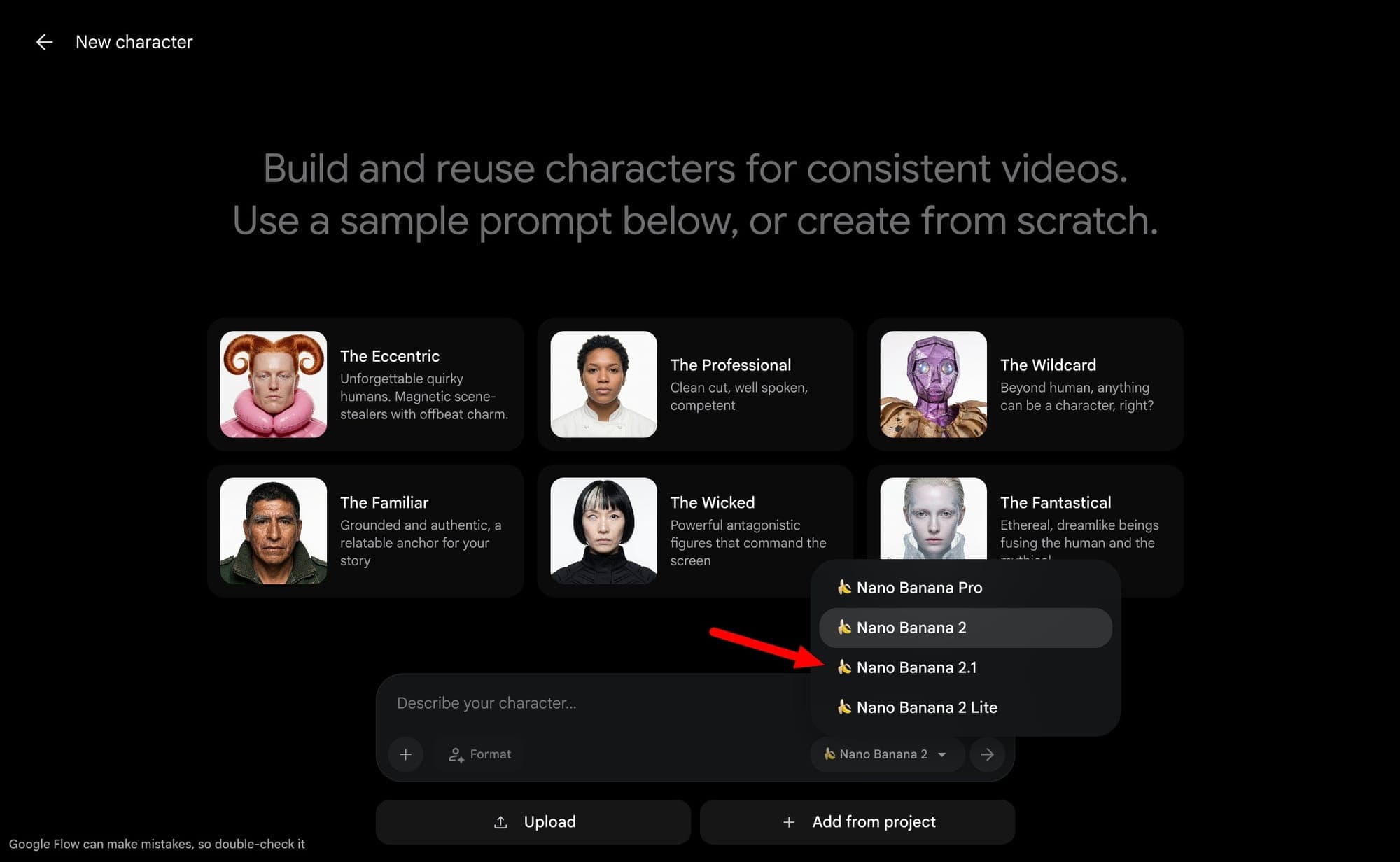
Google launches Nano Banana 2 Lite and Gemini Omni Flash

Google has quietly expanded its generative AI lineup with two new model releases. Nano Banana 2 Lite brings affordable text-to-image generation through the Gemini API, while Gemini Omni Flash enters preview with short-form video generation capabilities. Both models appear aimed at broadening access to Google's image and video tools.

Video

Google’s NotebookLM can sum up your research in a TikTok-style clip

Google's NotebookLM is gaining a short-video format that distills uploaded research into 60-second vertical clips, styled after the kind of content common on TikTok. The feature is rolling out to AI Ultra and Pro subscribers and pairs AI-generated narration with paper cutout-style visuals. It joins an existing set of NotebookLM output formats that already includes AI podcasts, cinematic videos, and visual explainers.

No image
Image

Google introduces a faster, cheaper image generator with Nano Banana 2 Lite

Google has unveiled Nano Banana 2 Lite, a lighter version of its image generation model designed to run faster and at lower cost. The update targets creators and developers who need efficient AI image production without sacrificing too much output quality. It continues a broader trend of model makers releasing trimmed-down variants alongside their flagship offerings.

Image

Google's new Nano Banana 2 Lite image model is its fastest and cheapest yet

Google has released Nano Banana 2 Lite, a lighter version of its Nano Banana 2 image generation model designed to prioritize speed and cost over maximum output quality. Images can be produced in just a few seconds, making it one of the faster options in Google's generative image lineup. The trade-off is a noticeable step down in visual fidelity compared to the full model.

Multimodal

Google launches Nano Banana 2 Lite for fast AI images and Gemini Omni Flash for video via API

Google has released two new generative AI models aimed at speed and API accessibility: Nano Banana 2 Lite for fast image generation and Gemini Omni Flash for text-prompted video creation and editing. Nano Banana 2 Lite produces images in roughly four seconds at $0.034 per image, while Gemini Omni Flash marks the first time Google has made video generation available through its API. Google suggests using the two models together as a pipeline, moving from a generated still image directly into an a

Image

NoimosAI launches Creative Agent for brand assets

NoimosAI has introduced Creative Agent, a tool designed to generate brand assets by drawing on patterns identified in high-performing market creatives. The system aims to ground visual output in data rather than purely open-ended generation. It positions itself as a practical option for teams looking to align creative production with proven market signals.

Multimodal

Start building with Nano Banana 2 Lite and Gemini Omni Flash

Google has released Nano Banana 2 Lite and Gemini Omni Flash, two new models aimed at image generation and video editing respectively. Nano Banana 2 Lite is positioned as Google's fastest and most cost-efficient image model, while Gemini Omni Flash brings high-quality video output and conversational editing capabilities. Both models are now available for developers to build with.

Image

You’re Trying to Spot AI-Generated Faces Wrong

Spotting an AI-generated face used to be straightforward - look for a mangled ear, an extra finger, or eyes that didn't quite line up. In 2026, those obvious tells have largely disappeared, and the conventional wisdom about how to detect synthetic faces needs revisiting. PetaPixel examines what the research and current tools actually say about identifying AI-generated portraits today.

Image

Proton's privacy-focused Lumo chatbot gets image generation

Proton has updated its Lumo chatbot with image generation and editing capabilities, marking a significant expansion of the privacy-focused AI assistant. The upgrade brings visual creative tools to a platform that distinguishes itself by keeping user data away from ad networks and third-party trackers. For users already in the Proton ecosystem, Lumo now offers a more complete AI workspace without sacrificing the company's data privacy commitments.

No image
Image

Gemini’s personalized AI image generation is now free for US users

Google is opening up personalized AI image generation in Gemini to free-tier users in the United States, a feature that was previously limited to paid subscribers. The tool draws on a user's interests and data from connected Google apps to tailor the images it produces. The expansion marks a notable shift in how broadly Google is willing to distribute its more data-integrated AI capabilities.

Image

Google expands personalized intelligence to Gemini app image creation

Google is extending its personalized intelligence features to image creation within the Gemini app, allowing the tool to draw on information about individual users when generating visuals. The move brings image generation closer in line with how Gemini already tailors text-based responses. It marks a step toward a more cohesive, context-aware experience across the app's creative tools.

Image

The Gemini app is bringing personalized image creation to more users.

Google is expanding Personal Intelligence features in the Gemini app, allowing it to draw on data from Gmail, Google Photos, YouTube, and Search to generate images and content that feel more relevant to individual users. The expansion brings these personalized capabilities to a broader audience, with user permission as a prerequisite. It marks a notable step in Google's effort to make generative AI outputs feel less generic and more grounded in a person's actual context.

No image
Video

A24 Will Survive the AI Backlash, but Some Are Convinced the Company Has ‘Sold Its Soul’

A24, long regarded as a standard-bearer for artistically ambitious cinema, is facing sharp criticism from its own fanbase after announcing a $75 million partnership with Google DeepMind to develop AI workflow tools. While the backlash has been vocal, industry observers largely expect the company to weather it without lasting damage. The deal has nonetheless raised pointed questions about what the studio's brand identity actually stands for.

No image
Image

Databricks’ former AI chief thinks he can cut AI’s power bill by 1,000x

Ali Ghodsi's successor at Databricks has launched a startup claiming its approach to AI inference can reduce energy consumption by a factor of 1,000. The company's first public demonstration, an image-generation system called Un-0, aims to show that its underlying technology can match the output of conventional AI systems at a fraction of the power cost. If the claims hold up under scrutiny, the implications for data center energy demand could be significant.

Image

Adobe Acquires AI Upscaling Specialists Topaz Labs

Adobe has announced the acquisition of Topaz Labs, a company widely respected among photographers and videographers for its AI-powered image and video enhancement tools. The deal brings capabilities like high-quality upscaling, noise reduction, and sharpening under Adobe's umbrella. Terms of the acquisition were not disclosed.

No image
Multimodal

Adobe acquires image and video enhancement tool maker Topaz Labs

Adobe has acquired Topaz Labs, the company behind a suite of AI-powered image and video enhancement tools. Adobe says it plans to integrate Topaz Labs' technology across its existing applications. The deal brings a well-regarded set of upscaling, sharpening, and noise-reduction tools under Adobe's umbrella.

Multimodal

Less Than a Quarter of Americans Use AI to Create or Edit Images

A new Pew Research study finds that only 24% of Americans use AI tools for creating or editing images and videos. Despite the rapid growth of generative image and video platforms, adoption remains limited across the general population. The findings offer a grounded look at where everyday use of these tools actually stands.

Multimodal

Figma now has AI motion graphics and shader tools

Figma used its annual Config conference to announce a set of updates aimed at tightening the loop between design and development. The additions include AI-generated motion graphics - where animations and transitions are created from text descriptions - alongside new shader tools and a reworked canvas built with full-stack workflows in mind. The changes reflect a broader push to reduce the context-switching that typically slows down creative and engineering teams.

Image

Models Accuse Fashion Brand of Using AI to Recreate Them

Several models are accusing fashion retailer Rainbow Shops of using AI to generate digital lookalikes of them, reportedly around the same time their bookings with the brand came to a halt. The allegations raise pointed questions about consent, likeness rights, and the growing use of generative AI in commercial fashion photography. The case is drawing attention as one of the more concrete examples of AI image tools intersecting with labor disputes in the modeling industry.

Multimodal

Adobe’s AI Assistant Wants to Give Photographers More Time for Actual Creative Tasks

Adobe has rolled out its Firefly-powered AI Assistant across Creative Cloud, bringing agentic AI capabilities to Photoshop, Premiere, Illustrator, InDesign, and Frame.io. Users can now issue natural-language instructions to carry out editing tasks across photos, videos, and graphics. The goal is to reduce time spent on repetitive workflows so photographers and editors can focus on creative decisions.

Image

Man Traumatized After Woman Uses His Photos for AI Social Media Posts Showing Fake Family Life

A man in Singapore discovered that a former schoolmate had been using his personal photos as source material to generate AI images depicting a fabricated family life on social media. The case highlights how generative AI tools can be weaponized for identity-based deception, even by people with only casual access to someone's public photos. Authorities in Singapore are now involved in the investigation.

Video

ByteDance's Seedance 2.5 breaks the 30-second barrier for AI video generation

ByteDance unveiled Seedance 2.5 at Volcano Engine's FORCE conference, a video generation model capable of producing clips longer than 30 seconds - a threshold few AI video tools have crossed. The model is expected to launch in early July alongside four other newly announced AI models from the company.

Image

Cycling Brand is Mocked Over AI Image of Handlebars Protruding From Bike Seat

REI, the outdoor and cycling retailer, drew widespread mockery this week after posting an AI-generated image on Instagram that depicted handlebars growing directly out of a bike seat - a physically impossible configuration that many followers were quick to point out. The incident adds to a growing list of public AI image blunders from brands that have skipped careful review of generated visuals before publishing them.

Video

The Oversight Board says Meta needs to do more to protect regular people from sexualized deepfakes

Meta's Oversight Board has issued recommendations calling on the company to strengthen protections for ordinary people targeted by sexualized AI-generated deepfakes. The board's suggestions focus on making the reporting process easier and more effective for non-public figures. It marks a continued push by oversight bodies to hold major platforms accountable for harms tied to generative AI content.

No image
Video

Google DeepMind bets $75M on AI’s future in Hollywood with A24 deal

Google DeepMind and independent studio A24 have announced a $75 million partnership aimed at developing AI tools specifically for filmmaking. The collaboration signals a notable shift toward integrating generative AI directly into professional creative production pipelines. It is one of the larger financial commitments from an AI research lab to a single entertainment partner to date.

Video

A24 takes on Google money to build AI tools

A24, the independent studio behind films like Everything Everywhere All at Once and Midsommar, has accepted $75 million from Google to develop AI tools aimed at movie production. The deal marks a notable move by a prestige indie label into studio-level AI infrastructure. It also signals Google's continued push to embed its AI capabilities into the entertainment industry.

Video

Google Deepmind and A24 team up on AI filmmaking research

Google DeepMind and independent film studio A24 have announced a long-term research partnership focused on AI filmmaking. Google is also making a roughly $75 million investment in A24, according to the Wall Street Journal. The deal pairs one of the leading AI research labs with a studio known for distinctive, filmmaker-driven projects.

Image

The EU doesn't really know what a deepfake is, and that's becoming a problem for retail

A major European retail trade group is pushing back against the EU AI Act's transparency requirements, arguing that AI-generated product imagery - think a sofa in a computer-generated living room - should not be classified alongside deepfakes. The dispute exposes a genuine ambiguity in the regulation's language that has real consequences for how online retail operates. With platforms like Zalando reporting that 90 percent of their marketing content is already AI-generated, the stakes are signifi

No image
Video

Snap spins off AI video team into new company, Dotmo, due to costs

Snap is spinning off its internal AI video team into a new independent company called Dotmo, with the move driven primarily by the high costs of developing generative video technology in-house. The staff involved are departing Snap to focus solely on AI video work under the new entity. It marks another instance of Snap shedding an internal unit rather than continuing to absorb the expense of frontier AI development.

Multimodal

Powering the world’s first AI arts museum

Rafik Anadol Studio has opened Dataland, billed as the world's first museum dedicated to AI arts, with Google Cloud providing the underlying infrastructure and Google Arts & Culture lending institutional support. The museum marks a notable step in bringing generative AI art into a dedicated physical and cultural space. It represents one of the more concrete attempts to treat AI-generated art as a serious curatorial discipline.

Image

Adobe’s redesigned AI studio remembers what your creations look like

Adobe is rolling out a redesigned Firefly AI studio in private beta, bringing editing and image generation into a single interface. A key addition is the ability to save named visual elements - characters, objects, and backgrounds - so they can be reused consistently across projects without drifting in appearance.

Multimodal

Photoshop and Premiere now have AI assistants

Adobe has launched a public beta bringing AI assistants to Photoshop, Premiere, Illustrator, InDesign, and Frame.io. Each assistant is tailored to its host application, handling tasks specific to that tool rather than acting as a general-purpose chatbot. The rollout marks a significant step in Adobe's broader push to embed conversational AI throughout its Creative Cloud suite.

Image

Adobe brings its Firefly AI Assistant inside of Premiere, Photoshop and Illustrator

Adobe has integrated its Firefly AI assistant directly into Premiere Pro, Photoshop, and Illustrator, bringing generative AI tools into the core workflow of its most widely used creative applications. Rather than requiring users to switch between separate tools or platforms, the assistant is now accessible from within each app. The move reflects Adobe's ongoing effort to embed AI capabilities at the point where creative work actually happens.

Multimodal

Adobe adds AI agents to Photoshop, Premiere, and more Creative Cloud apps

Adobe is integrating AI agents into its core Creative Cloud applications, including Photoshop and Premiere, allowing users to describe a desired outcome in plain language while the software carries out the underlying multi-step tasks. The rollout also extends to third-party platforms such as ChatGPT and Claude. The move reflects a broader shift in how professional creative tools are beginning to handle complex, multi-action workflows.

Image

Midjourney goes from generating cat images to full-body ultrasound scans

Midjourney, best known for its AI image generator, has unveiled its first hardware product: a full-body ultrasound scanner designed to image muscle, fat, bone, and organs. CEO David Holz described the device as aiming for image quality comparable to MRI, and envisions it being used as frequently as once a day. The announcement comes alongside plans for a San Francisco spa where the scanner would be available to the public.

Video

Amazon, Nvidia, and AMD bet $310 million on AI startup building 3D world models

Odyssey ML has raised $310 million from Amazon, Nvidia, and AMD, pushing its valuation to $1.45 billion. The startup is focused on building 3D world models - AI systems that can understand and generate structured representations of physical space. The round also draws in notable backers including Google chief scientist Jeff Dean and CIA-linked venture fund IQT.

Multimodal

June Pixel Drop: New features for creators, Gemini upgrades and more

Google's June 2026 Pixel Drop brings a set of updates focused on creative tools and productivity, including new text-to-video capabilities powered by Gemini Omni. The update also refines screen recording and improves multitasking across Pixel devices. It continues Google's pattern of rolling out AI-driven features to its hardware lineup through periodic software drops.

No image
Video

Meet Qwen-RobotSuite: Three Embodied AI Models for VLA Manipulation, Video World Modeling, and Navigation

The Qwen team has released Qwen-RobotSuite, a collection of three specialized models targeting different challenges in embodied AI: physical manipulation, world modeling, and navigation. Each model draws on existing Qwen language and vision foundations while introducing architecture and training choices tuned for robotics tasks. The release comes with benchmark results and details on the data pipelines used to train each system.

Image

Photographer Disturbed By AI-Generated ‘Women’ in Beauty Magazine

Austin-based photographer and director of photography Cassandra Klepac recently noticed AI-generated images of women appearing in a beauty magazine, raising concerns about the implications for working photographers. The incident highlights how generative AI is quietly making its way into fashion and beauty editorial content. Her reaction has sparked a broader conversation about transparency, labor, and the future of commercial photography.

Image

Adobe Adds More User Control to AI Features Inside Lightroom and Photoshop

Adobe has rolled out new Creative Cloud updates to Lightroom and Photoshop that give photographers more control over AI-assisted workflows, particularly around photo culling and selection. The changes are aimed at reducing the time photographers spend manually sorting through large batches of images. The updates reflect Adobe's ongoing effort to make AI tools feel more transparent and adjustable rather than fully automated.

Video

Cutback launches AI tool to automate long-form video editing

Cutback has introduced Selects, an AI editing assistant designed to handle the early, time-consuming stages of long-form video editing. The tool ingests raw footage, organizes it automatically, and produces a draft edit based on a single text prompt. It targets creators and editors who spend significant time just getting footage into a workable shape before any real editing begins.

Video

Microsoft Research's Mirage gives video generation a persistent spatial memory that doesn't forget what's around the corner

Mirage, a video world model developed by Microsoft Research and academic collaborators, introduces a persistent spatial memory system that stores scene information in latent space rather than relying on pixel-based point clouds. The approach keeps environments visually consistent across long camera movements while significantly reducing compute and memory costs. Moving object tracking across segments remains an open limitation.

Image

New AI model called "Count Anything" does exactly what it says, and that's harder than it sounds

A new model called "Count Anything" aims to be the first general-purpose AI system capable of counting objects in virtually any image using only a text prompt. Researchers report it cuts counting error rates roughly in half compared to prior approaches. The system handles a wide range of subjects - from crowd scenes to microscopic cell samples - though very dense arrangements and vague descriptions remain challenging.

Image

Apple’s new AI photo editing tools mostly work, for better and worse

Apple is bringing native AI photo editing to the iPhone for the first time with iOS 27, introducing tools that let users reframe, extend, and clean up their images directly in the Photos app. The features are currently available in the iOS 27 developer beta and may change before a public release. Compared to competitors like Google's Pixel lineup, the tools are relatively modest - but they mark a meaningful shift in what iPhone users can do without leaving Apple's ecosystem.

Video

The future of Hollywood isn’t feeding prompts into vanilla gen AI models

Despite years of bold claims about AI transforming filmmaking, very few projects have emerged that feel like genuine entertainment audiences would seek out. A new short film, "Dear Upstairs Neighbors," offers a different approach - one built on custom-trained versions of Google DeepMind's Veo and Imagen models rather than off-the-shelf AI tools. It may point toward what a more serious production pipeline actually looks like.