Google wants video AI to understand what people need as they work
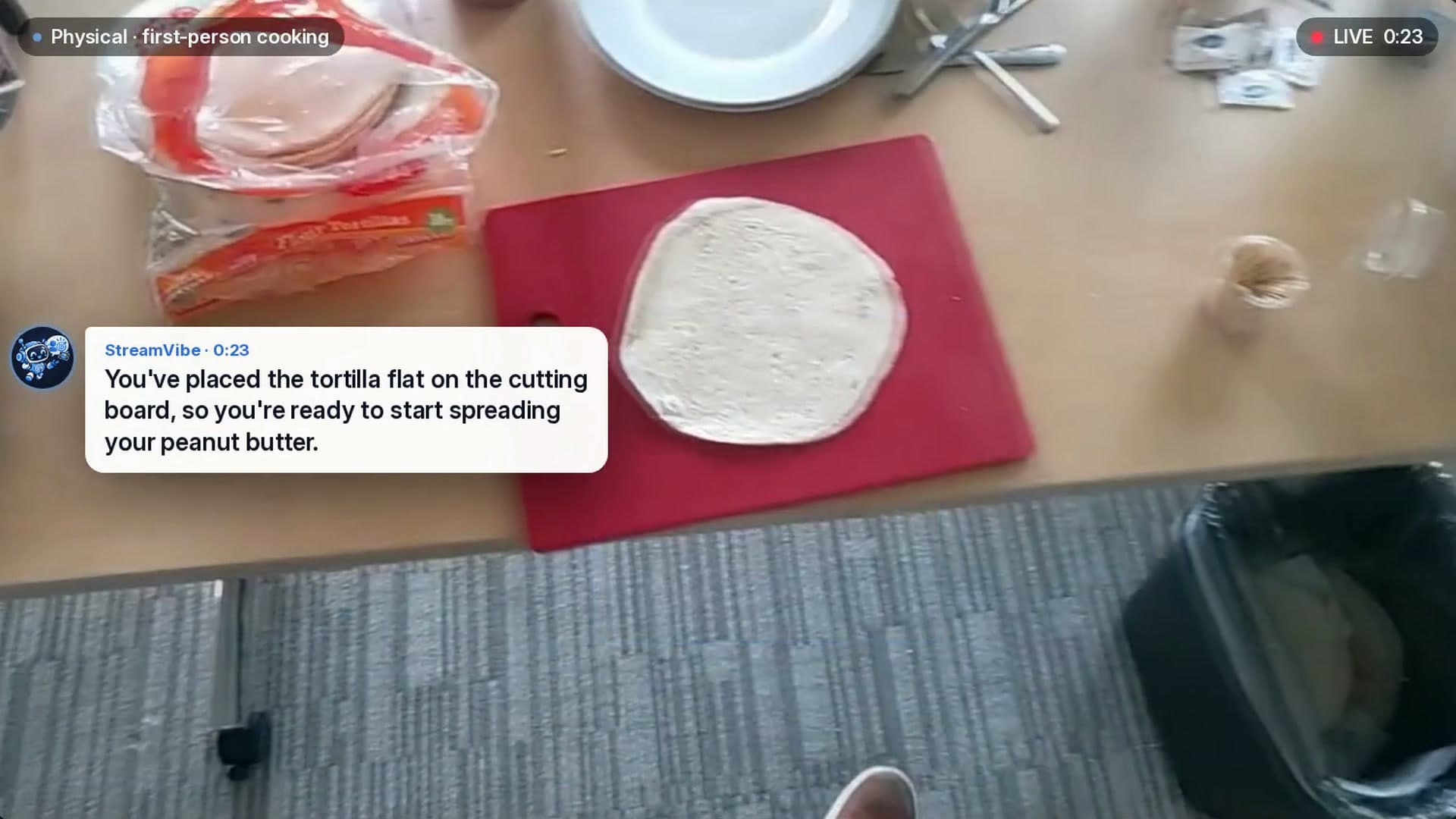
A Google-led research team has developed StreamVibe, a video AI agent trained to watch people perform practical tasks - such as cooking or assembling furniture - and intervene with helpful information only when the situation calls for it. The core challenge the system addresses is knowing when to speak, not just what to say. Offering help too early or too late is not merely unhelpful; in a hands-on context it can be actively disruptive.
To evaluate how well current models handle this problem, the researchers introduced an accompanying benchmark designed specifically around proactive video assistance. The results are sobering: none of the models tested could reliably identify the right moment to step in, particularly as video length increased. Errors made early in a sequence tend to compound, and the quality of responses drops off sharply in longer recordings - a pattern that points to a fundamental limitation in how today's video models maintain context over time.
The work sits at an intersection of two active research threads in AI: streaming video understanding and context-aware assistance. Most existing video AI systems are built to answer questions when prompted, placing the burden of knowing when to ask on the user. StreamVibe flips that assumption, requiring the model to continuously monitor a scene and make its own judgment calls about when a user might benefit from guidance. That is a considerably harder problem, involving not just visual comprehension but something closer to situational awareness.
For practical applications - think step-by-step repair guides, kitchen assistants, or training tools in industrial settings - the gap identified here matters. A system that interrupts too often becomes noise; one that stays silent at a critical moment fails its purpose entirely. Google's benchmark provides a concrete way to measure progress on this timing problem, which is a useful contribution in itself even before the underlying models improve enough to clear the bar it sets.