
Building Visual Intelligence — Andreas Blattmann & Dustin Podell, Black Forest Labs
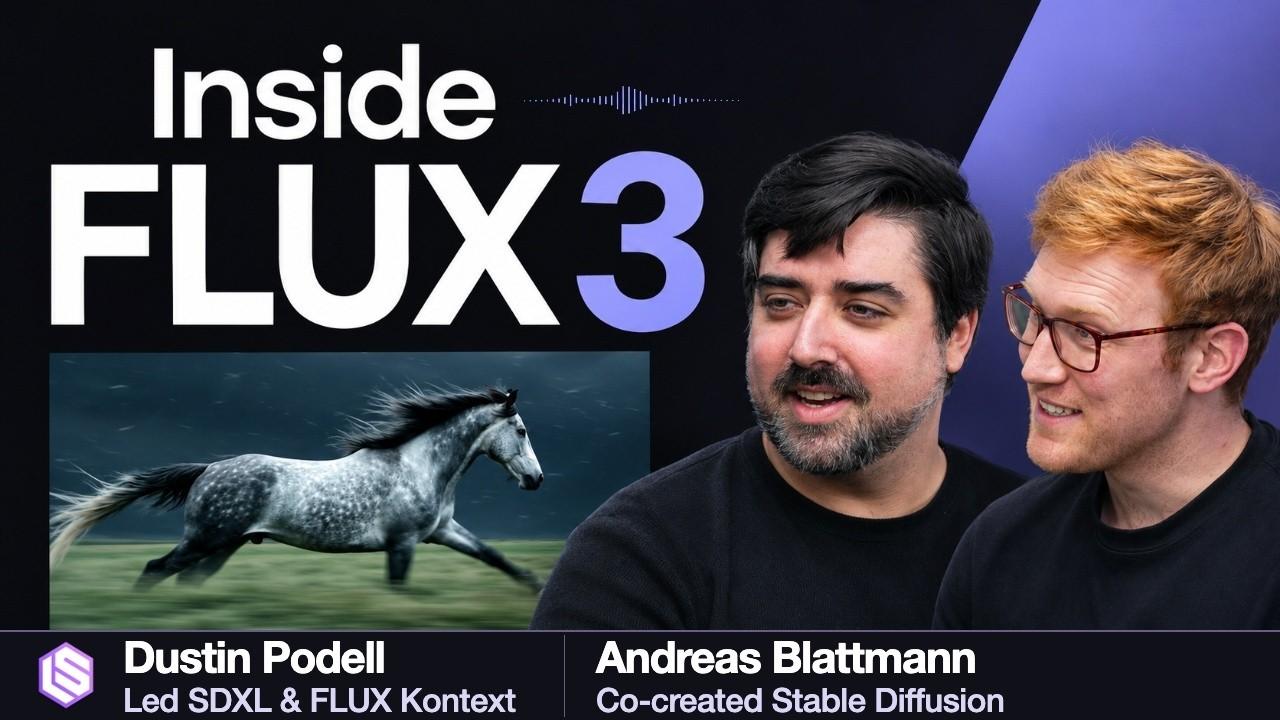
Black Forest Labs, the team behind the FLUX family of image generation models, has been relatively quiet about its broader research ambitions - until now. In a conversation on the Latent Space podcast, co-founders Andreas Blattmann and Dustin Podell make a detailed case for why visual data - images, video, and audio - represents a rich and underexplored substrate for training AI systems that can reason about the world in general ways.
The core argument is that pixels, motion, and sound carry an enormous amount of structured information about physical reality. Unlike text, which is an abstraction layer removed from direct experience, visual and multimodal data encodes causality, geometry, and dynamics in ways that may be harder to fake and easier to ground. Blattmann and Podell suggest that models forced to predict and generate across these modalities have to develop internal representations that are, in some sense, more tightly coupled to how the world actually works.
This framing puts Black Forest Labs in a broader conversation happening across the field - one that includes video world model research at other labs - about whether generative modeling and perception can serve as a foundation for more capable AI, rather than being treated purely as a media production tool. The FLUX models have established the team's technical credibility in high-fidelity image synthesis, and this discussion suggests that work is part of a longer research arc, not an endpoint.
For practitioners and researchers following the generative image and video space, the conversation is worth attention not just for the specific claims, but for the way Blattmann and Podell situate their work within fundamental questions about learning and representation. Whether or not one agrees that visual intelligence is a viable path to AGI, the perspective from a lab that has shipped competitive frontier models adds weight to the discussion and hints at where Black Forest Labs sees its research heading next.


