Deeper Thinking More Accurate Generation Introducing Seedream 5 0 Lite
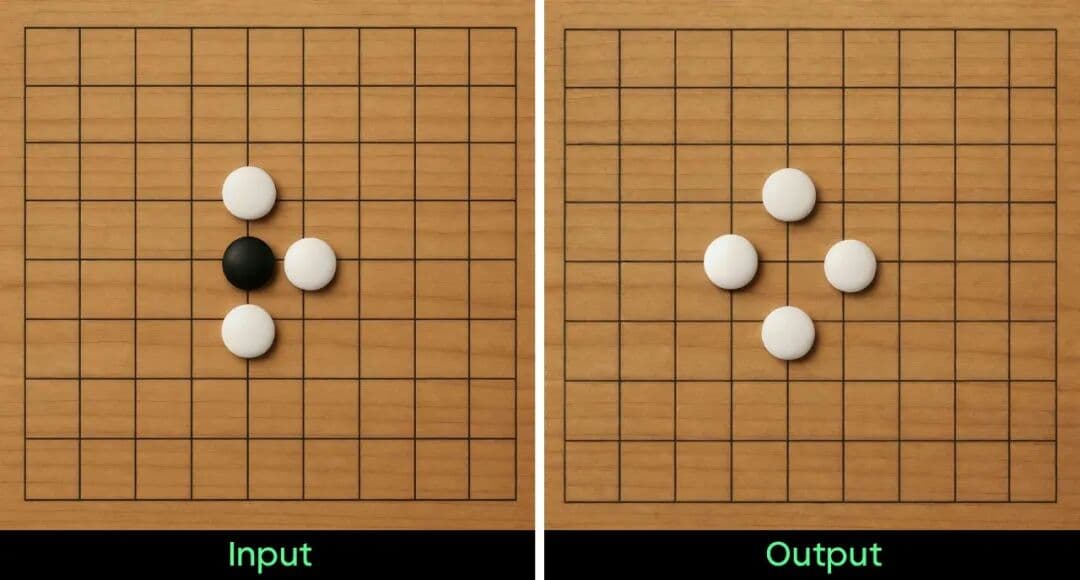
ByteDance's Seed research team has introduced Seedream 5.0 Lite, a streamlined version of its Seedream 5.0 text-to-image model. The Lite variant is positioned as a more efficient option that retains meaningful generation quality while reducing computational demands - making it more practical for broader deployment scenarios.
The headline feature of the 5.0 Lite release is what the team describes as "deeper thinking," a reasoning-oriented approach applied during the generation process to improve accuracy. This likely refers to extended inference-time computation or an internal chain-of-thought mechanism that helps the model better parse complex prompts before committing to an output. The practical result is meant to be stronger adherence to prompt details, particularly in cases involving spatial relationships, text rendering, or multi-subject compositions.
Seedream has been ByteDance's primary vehicle for advancing image generation research, and the 5.0 line continues that trajectory. The Lite designation follows a pattern seen across the AI industry, where organizations release scaled-down variants of flagship models to serve latency-sensitive or cost-constrained use cases. Rather than simply pruning the full model, ByteDance appears to have optimized Seedream 5.0 Lite specifically around accuracy and prompt fidelity as its core strengths.
For developers and researchers evaluating image generation tools, the Seedream 5.0 Lite release adds another option to a competitive landscape that includes models from Stability AI, Black Forest Labs, and others. The emphasis on reasoning-guided generation reflects a broader trend in the field, where techniques borrowed from large language model development - such as inference-time scaling - are being applied to diffusion and other image synthesis architectures to close the gap between what users ask for and what models actually produce.