
DJI Used an AI-Generated ‘Person’ In an Ad, Angering the Actual Humans Who Buy Products
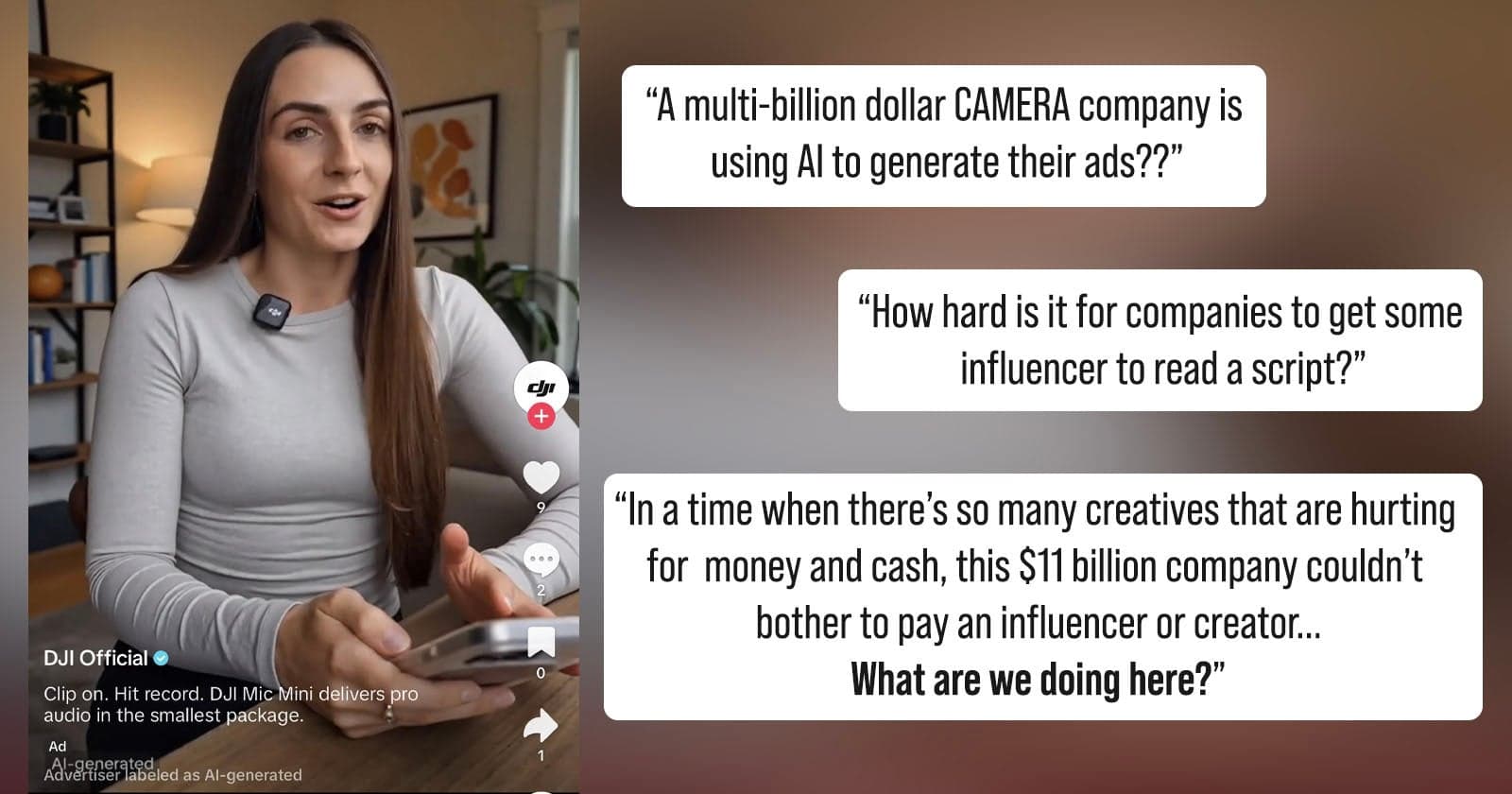
DJI, the dominant name in consumer and professional drone hardware, found itself in an uncomfortable spotlight after a TikTok advertisement it posted was found to feature an AI-generated human avatar rather than a real person. The ad has since been deleted, but screenshots and recordings circulated widely enough to fuel a sustained backlash from the company's community of users.
The criticism is worth understanding in context. DJI's customer base consists largely of photographers, videographers, and content creators - people whose livelihoods or passions depend on the craft of capturing real-world imagery. Seeing a company that sells tools for authentic visual storytelling turn to a synthetic stand-in for its own promotional material struck many as contradictory, and to some, dismissive of the very professionals they rely on for word-of-mouth credibility.
AI-generated people in advertising are not new, and TikTok in particular has seen a surge of AI avatar content, often from smaller brands working with limited production budgets. DJI, however, is not a small brand. The company holds a commanding share of the drone market and has the resources for conventional production. That makes the choice feel less like a budget constraint and more like a deliberate creative or operational decision, which is part of what sharpened the reaction.
DJI has not offered a detailed public explanation for why the avatar was used or who approved the content. The episode adds to a growing list of cases where established brands have misjudged how their audiences would receive AI-generated imagery in commercial contexts. For companies selling products closely tied to human creativity and visual craft, the calculus around synthetic media in marketing carries more weight than it might for brands in other categories - and the DJI situation is a clear illustration of what can go wrong when that weight is underestimated.
