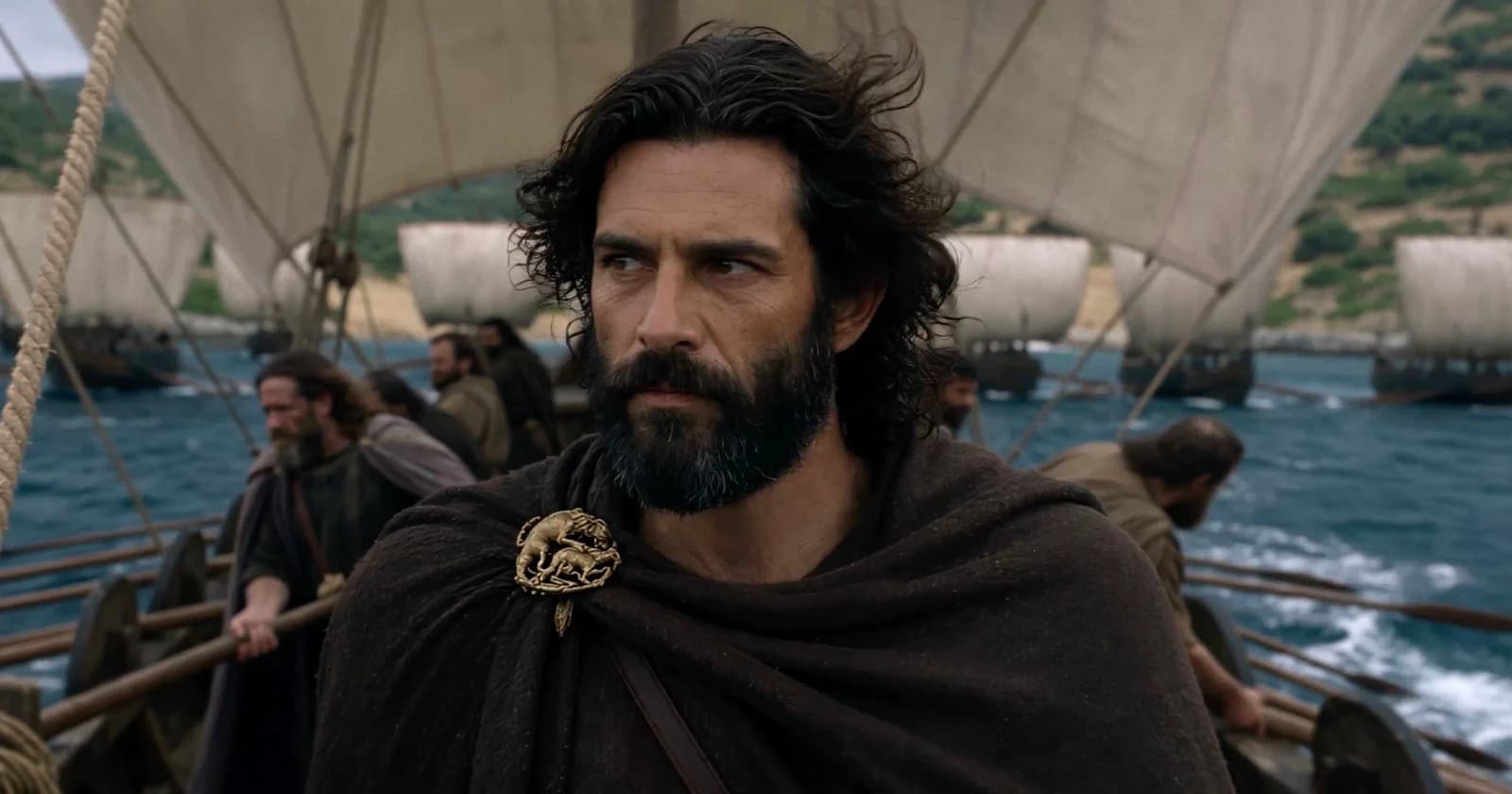
Grok releases the first seven minutes of its AI-generated ‘Odyssey’
Grok has published the opening seven minutes of an AI-generated film based on Homer's Odyssey, making it one of the more ambitious long-form AI video projects released publicly to date. The preview gives viewers a concrete sense of what current generative video tools can produce when applied to a sustained, narrative-driven project rather than a short clip or proof-of-concept reel.
The footage holds together at a surface level - scenes are visually consistent enough to follow, and the production avoids the most jarring artifacts that have plagued earlier AI video efforts. But reviewers note that the material lacks the qualities that tend to define meaningful cinema: a distinct artistic vision, imagery that surprises or moves the viewer, and any felt sense that human experience is being examined or communicated. The result reads less like a film and more like a demonstration of capability.
That distinction matters as AI video generation matures. Tools like Sora, Kling, and Runway have steadily improved at producing technically passable footage, but the gap between technical competence and genuine expression remains wide. Grok's Odyssey project puts that gap on display at a scale - seven continuous minutes of narrative content - that shorter demos have been able to sidestep. Choosing a source text as canonically rich as the Odyssey also raises the bar implicitly, inviting comparison to decades of serious literary and cinematic interpretation.
For the industry, the release is useful data. It shows that AI pipelines can now sustain visual coherence across a longer runtime, which is a meaningful technical step. It also clarifies what the current generation of tools still cannot supply on their own: judgment, intention, and the kind of specific human point of view that turns competent imagery into something worth watching. Whether future iterations close that gap - or whether it requires deeper integration of human creative direction - remains an open question.