
Nvidia bets big on physical AI at GTC Taipei with a new world model, driving brain, and open humanoid robot
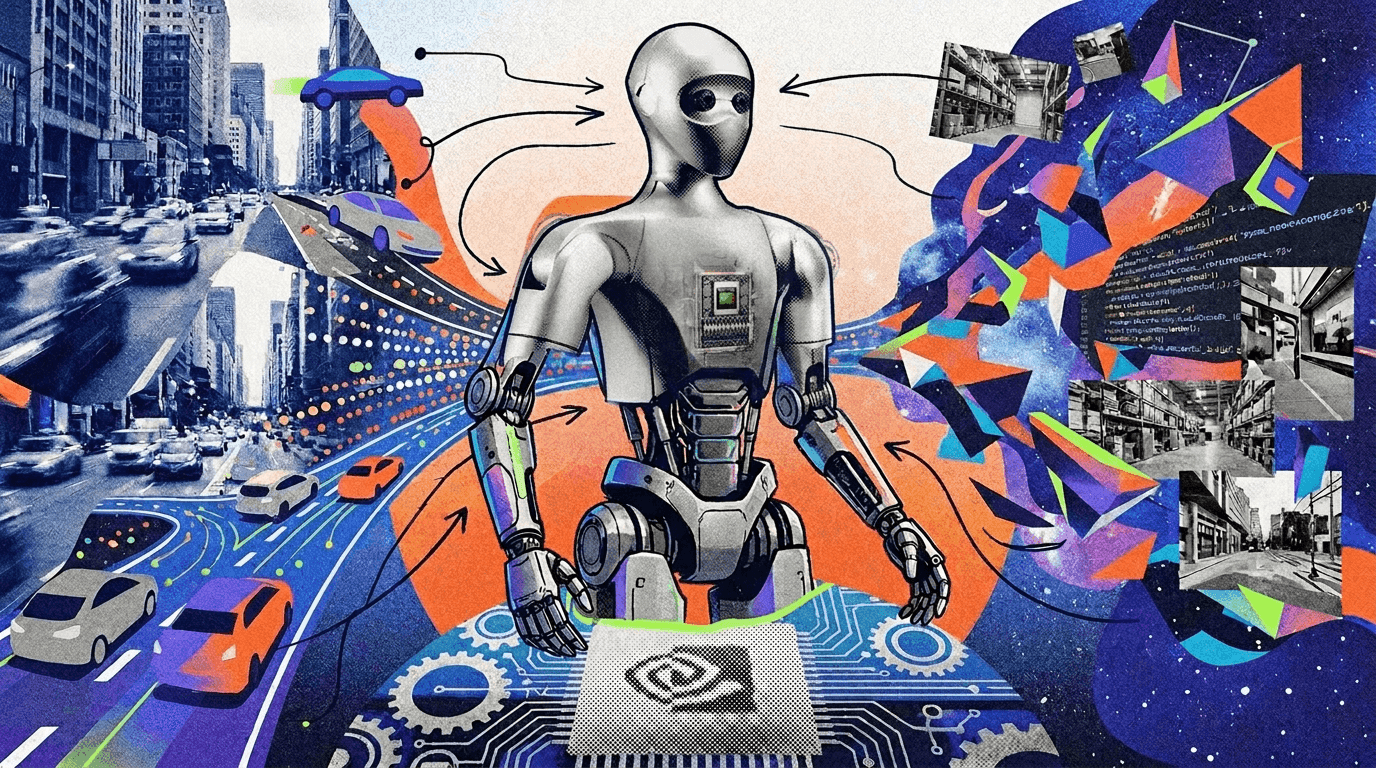
At GTC Taipei, Nvidia announced a cluster of new models and platforms targeting what the company calls physical AI - systems that need to understand and act within the real world. The headline releases include Cosmos 3, an updated world model designed to generate realistic synthetic environments for training, along with Alpamayo 2 Super, a substantially scaled-up model for autonomous driving, and a new open reference design for humanoid robots.
Cosmos is Nvidia's line of world foundation models, which generate video simulations of physical environments. These simulations are used to create training data for robots and vehicles without requiring the same volume of real-world collection. Cosmos 3 appears to push that capability further, likely improving the fidelity and physical plausibility of generated scenes - both of which matter directly for whether downstream models trained on synthetic data transfer well to real deployments.
Alpamayo 2 Super builds on Nvidia's earlier work in autonomous vehicle AI. Scaling a driving model generally means improving its ability to handle edge cases, unusual road conditions, and longer-horizon planning. The Super designation suggests a meaningful increase in model size or training compute, following a pattern seen across many AI domains where scaling reliably improves performance on complex tasks. Autonomous vehicle developers have increasingly relied on foundation models as a base that can be fine-tuned for specific hardware or regulatory environments.
The humanoid robot reference platform is perhaps the broadest announcement in terms of potential reach. By releasing an open design, Nvidia lowers the barrier for companies building bipedal robots, giving them a tested hardware and software starting point rather than requiring everything to be built from scratch. This fits a wider industry pattern where the real competition is shifting toward software, simulation, and training pipelines rather than mechanical design alone. Together, the three announcements reinforce Nvidia's strategy of positioning its hardware and software stack - spanning GPUs, simulation tools, and foundation models - as the underlying infrastructure for the next wave of embodied AI systems.
