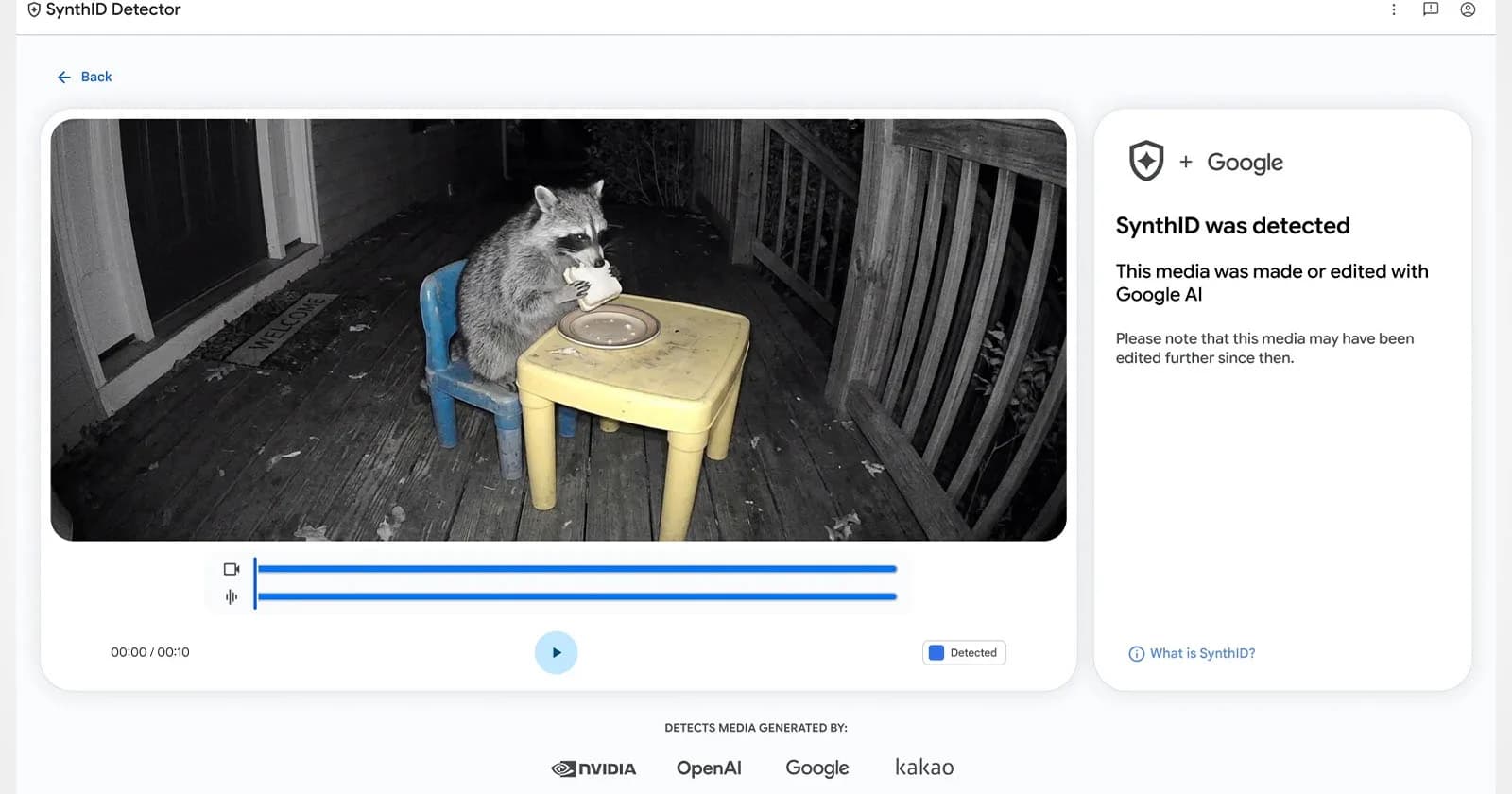
TIME has named Google SynthID one of the Best Inventions of 2026.

TIME magazine has included Google's SynthID on its Best Inventions of 2026 list, drawing attention to one of the more practical efforts to address a persistent challenge in generative AI - how to reliably identify content that has been produced by a machine. The recognition comes as questions around AI-generated media and its potential for misuse have become more pressing across journalism, social platforms, and policy discussions.
SynthID, developed by Google DeepMind, works by embedding an imperceptible watermark directly into generated content at the pixel or signal level, depending on the media type. Unlike metadata-based approaches that can be easily stripped, the watermark is woven into the content itself, making it more resistant to common attempts at removal such as cropping, compression, or re-encoding. The system supports multiple modalities, including images, audio, text, and video.
The tool is designed to work in two directions - generation and detection. When content is produced using a compatible Google model, SynthID can embed the watermark automatically. A separate detection tool can then scan a piece of content and return a confidence assessment of whether a watermark is present. This makes it useful not just for labeling content at the point of creation, but also for verification after the fact, which is where many competing approaches fall short.
The TIME recognition is notable partly because it signals mainstream acknowledgment of AI watermarking as a meaningful area of development rather than a niche technical concern. SynthID has been available to some Google Cloud customers and integrated into products like Imagen, and Google has also open-sourced parts of the tooling to encourage broader adoption. As regulatory bodies in the EU and elsewhere begin requiring disclosure of AI-generated content, tools like SynthID are likely to see increased relevance in both commercial and compliance contexts.