gen‑ai.news
← Back
Image

Build 2026: Microsoft tops Google in image generation while playing catch-up on reasoning

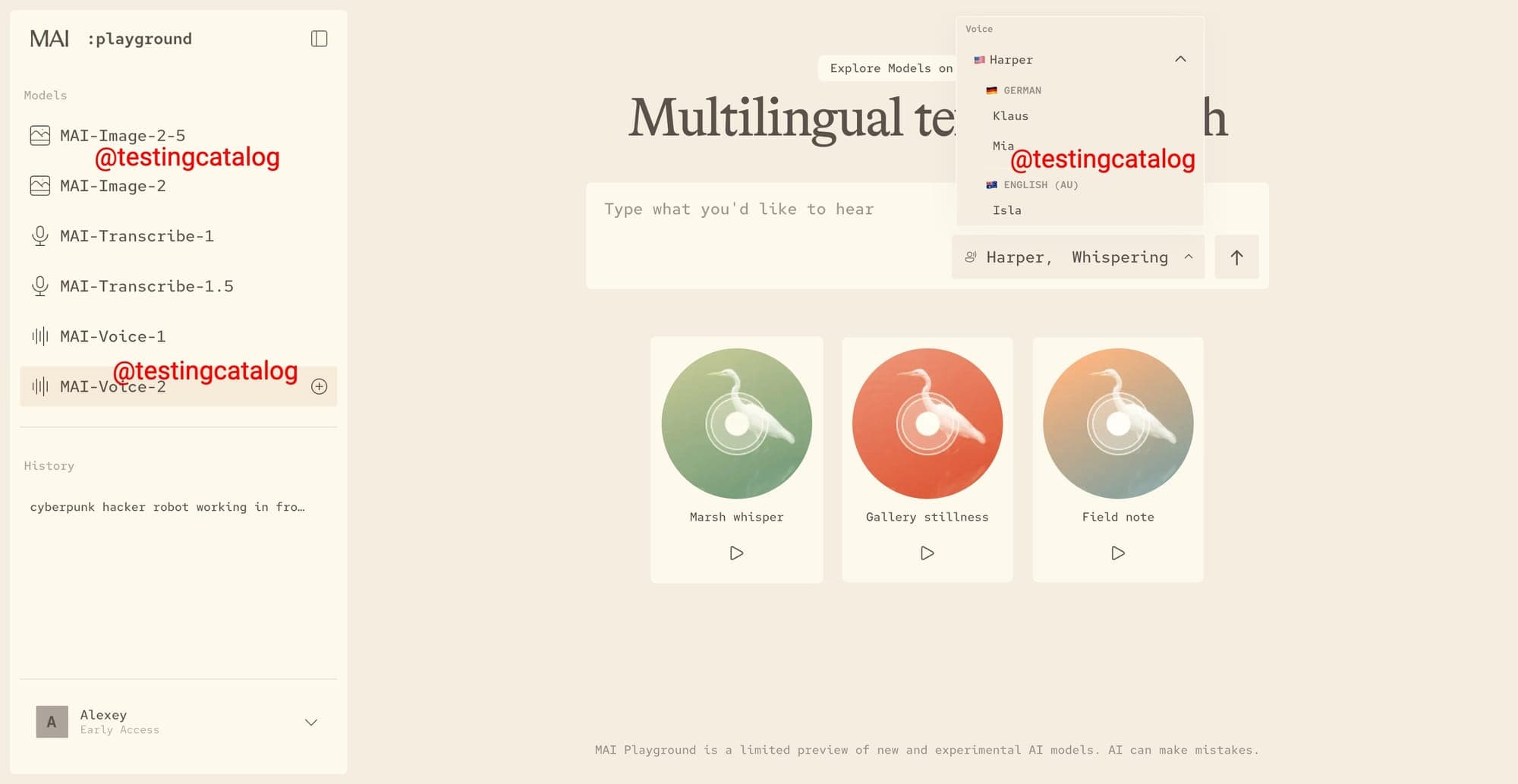
Microsoft used its Build 2026 conference to present seven AI models developed internally, marking a notable expansion of the company's own model portfolio beyond its longstanding reliance on OpenAI. Among the new releases is Microsoft's first in-house reasoning model, a category that OpenAI, Google, and Anthropic have been competing in for some time. The move suggests Microsoft is working to reduce dependency on external model providers while building capabilities it can control and iterate on directly.

On the image generation side, Microsoft is claiming its internal models now surpass Google's in quality - a meaningful benchmark given Google's sustained investment in models like Imagen. If accurate, this would represent a shift in the competitive landscape for AI-generated visuals, where a handful of companies have been trading positions over the past two years. Microsoft has not historically been a leader in image generation, so a claim of this kind carries some weight as a signal of how far its internal research has progressed.

The conference also introduced a new model tuning method, though details on the specific technique and how it compares to existing fine-tuning or reinforcement-based approaches were not fully elaborated in initial reports. Tuning methods matter considerably in practice - they determine how efficiently organizations can adapt general-purpose models to specific tasks without retraining from scratch.

Rounding out the announcements was an autonomous background agent, a system designed to carry out tasks without requiring continuous user interaction. Background agents are an active area of development across the industry, as the practical value of AI assistants grows when they can handle longer-horizon work independently. Microsoft's version appears aimed at productivity workflows, though the scope of what it can handle autonomously will depend on how its permissions, context handling, and error recovery are implemented. Taken together, the Build 2026 announcements paint a picture of a company accelerating its internal AI capabilities across generation, reasoning, and agentic behavior simultaneously.

Enjoy this story? Get the next one in your inbox.

Twice a week: the most important stories in generative image and video AI, distilled into a 2-minute read.

Free. Unsubscribe any time. No spam, ever.

Your next read

Image

AI ‘content creators’ are getting harder to spot

AI-generated social media personas have grown harder to distinguish from real people, raising questions about transparency and trust on platforms built around personal identity. Early virtual influencers were visually distinct enough that audiences could easily spot them, but that gap is closing fast. The Verge traces how the technology and the business models around it have matured together.

Image

Meta made its own AI-generated clickbait news feed

Meta's standalone AI app has introduced a 'For You' section that serves up AI-generated news-style articles, complete with AI-produced images and text. The content follows familiar clickbait patterns, raising questions about accuracy and the platform's direction. It marks a notable shift from the app's original focus on a social feed of user-shared AI conversations and images.

Image

Google shuts down the AI image app Pixel Studio

Google is closing Pixel Studio, its AI image generation app for Pixel devices, less than two years after it launched. The shutdown continues a pattern of Google retiring products that failed to gain lasting traction. Users will need to look elsewhere for on-device AI image tools.