gen‑ai.news

Archive, page 16

Every story we have published on generative image and video AI, newest first. 500 stories across 21 pages.

Looking for something specific? Search the archive · Browse by issue

Multimodal

Thinking Machines Lab Releases Inkling: A 975B-Parameter Open-Weights Multimodal MoE With 41B Active Parameters And Controllable Thinking Effort

Thinking Machines Lab has released Inkling, a 975B-parameter open-weights multimodal model built on a Mixture-of-Experts architecture that keeps only 41B parameters active at any given time. Licensed under Apache 2.0, it accepts text, image, and audio inputs and offers a 1M-token context window. Rather than competing for top benchmark rankings, the model is positioned as a customizable base with adjustable reasoning depth.


Reelful’s AI turns your camera roll into short-form videos for social media
Video

Reelful’s AI turns your camera roll into short-form videos for social media

Reelful is a new app that uses AI to automatically assemble short-form social media videos from photos and clips already stored in a user's camera roll. It targets people who want to post regularly but find conventional editing software too demanding. The app handles sequencing, timing, and formatting without requiring any manual editing experience.

‘The Odyssey’s’ AI-Generated Competitor Is Bereft of Humanity
Video

‘The Odyssey’s’ AI-Generated Competitor Is Bereft of Humanity

An AI-generated adaptation of Homer's Odyssey is heading to screens around the same time as Christopher Nolan's highly anticipated live-action version, prompting pointed questions about the role of fully synthetic filmmaking in cinema. The comparison between the two projects throws into sharp relief what generative video tools can and cannot yet replicate. A PetaPixel writer argues the AI film is notably lacking in the human qualities that make storytelling resonate.

Reconstructing Pelé’s “lost” goal
Video

Reconstructing Pelé’s “lost” goal

Google DeepMind used generative AI to reconstruct a 1959 Pelé goal for which no video footage survives. The project, documented in a short film, draws on historical accounts and AI image and video synthesis to visualize the legendary strike at Rua Javari. It offers a glimpse into how AI tools are being applied to cultural and historical preservation.

Video-generation startup PixVerse raises $439M, valuation soars past $2B
Video

Video-generation startup PixVerse raises $439M, valuation soars past $2B

PixVerse, a startup focused on AI video generation, has closed a $439 million funding round that pushes its valuation above $2 billion. The company plans to use the capital to develop its world model capabilities and grow its presence in new markets. The raise reflects continued investor appetite for generative video infrastructure as competition in the space intensifies.

Video

Building a VideoAgent-Style Multi-Agent System: Intent Parsing, Graph Planning, and Tool Routing for Video Editing Tasks

A new tutorial from MarkTechPost walks through building a VideoAgent-style multi-agent pipeline for video editing, requiring no API keys. The system chains together intent parsing, graph planning, and tool routing to handle natural-language video editing instructions end to end. Output ranges from question answering about video content to fully edited artifacts like beat-synced cuts.

Exclusive: Early 30-second AI videos generated by Seedance 2.5
Video

Exclusive: Early 30-second AI videos generated by Seedance 2.5

ByteDance is preparing to launch Seedance 2.5, a video generation model capable of producing native 30-second clips. API access is expected to open around July 16 following earlier delays. Testing Catalog has shared early sample outputs ahead of the official release.

Meta turns off the Instagram feature that let users make AI deepfakes of public accounts
Image

Meta turns off the Instagram feature that let users make AI deepfakes of public accounts

Meta has disabled an Instagram feature that allowed users to generate AI images by tagging public accounts, after swift and widespread criticism. The feature, tied to Meta's new Muse Image AI model, enabled anyone to use another account's content in AI-generated images without the account owner's consent. The company walked back the functionality just days after announcing it.

Video

Meet LingBot-World-Infinity: An Open Causal World Model With An Agentic Harness

Ant Group's embodied-intelligence unit Robbyant has released LingBot-World-Infinity, a 14-billion-parameter causal video generation model designed to function as an interactive world simulator. The model pairs a novel attention mechanism with distillation over long rollout trajectories to address the texture and geometry degradation that typically plagues extended generation sessions. A two-tier agentic harness - separating high-level planning from rendering - enables a demonstrated 60-minute co

The AI-Generated Taylor Swift Wedding Photos Are Getting Debunked Really Quickly
Image

The AI-Generated Taylor Swift Wedding Photos Are Getting Debunked Really Quickly

When photos purporting to show Taylor Swift's wedding circulated online last weekend, they were debunked faster than most previous high-profile AI image hoaxes. The episode is drawing attention not for the fakes themselves, but for how quickly audiences, journalists, and verification tools identified them as generated. It may signal a meaningful shift in how the public handles AI-fabricated imagery around major news events.

Here's how to block Meta from using your Instagram pictures for its AI
Image

Here's how to block Meta from using your Instagram pictures for its AI

Meta has quietly opted all public Instagram accounts into its Muse Image AI training program, using posted photos without requiring any additional consent from users. If you would prefer your images not be used for this purpose, there is an opt-out process available - though it requires manual action on your part. Here is what you need to know to protect your content.

Character.AI wants a piece of the microdrama pie
Video

Character.AI wants a piece of the microdrama pie

Character.AI is expanding its platform into short-form video with the launch of c.ai Series, episodic animated content built almost entirely with generative AI. The move positions the company within the fast-growing microdrama market, which is projected to reach $26 billion in the coming years. Unlike live-action microdrama platforms, c.ai Series lets viewers watch and interact with AI-generated animated stories on their phones.

ByteDance debuts Seedream 5.0 Pro with advanced reasoning
Image

ByteDance debuts Seedream 5.0 Pro with advanced reasoning

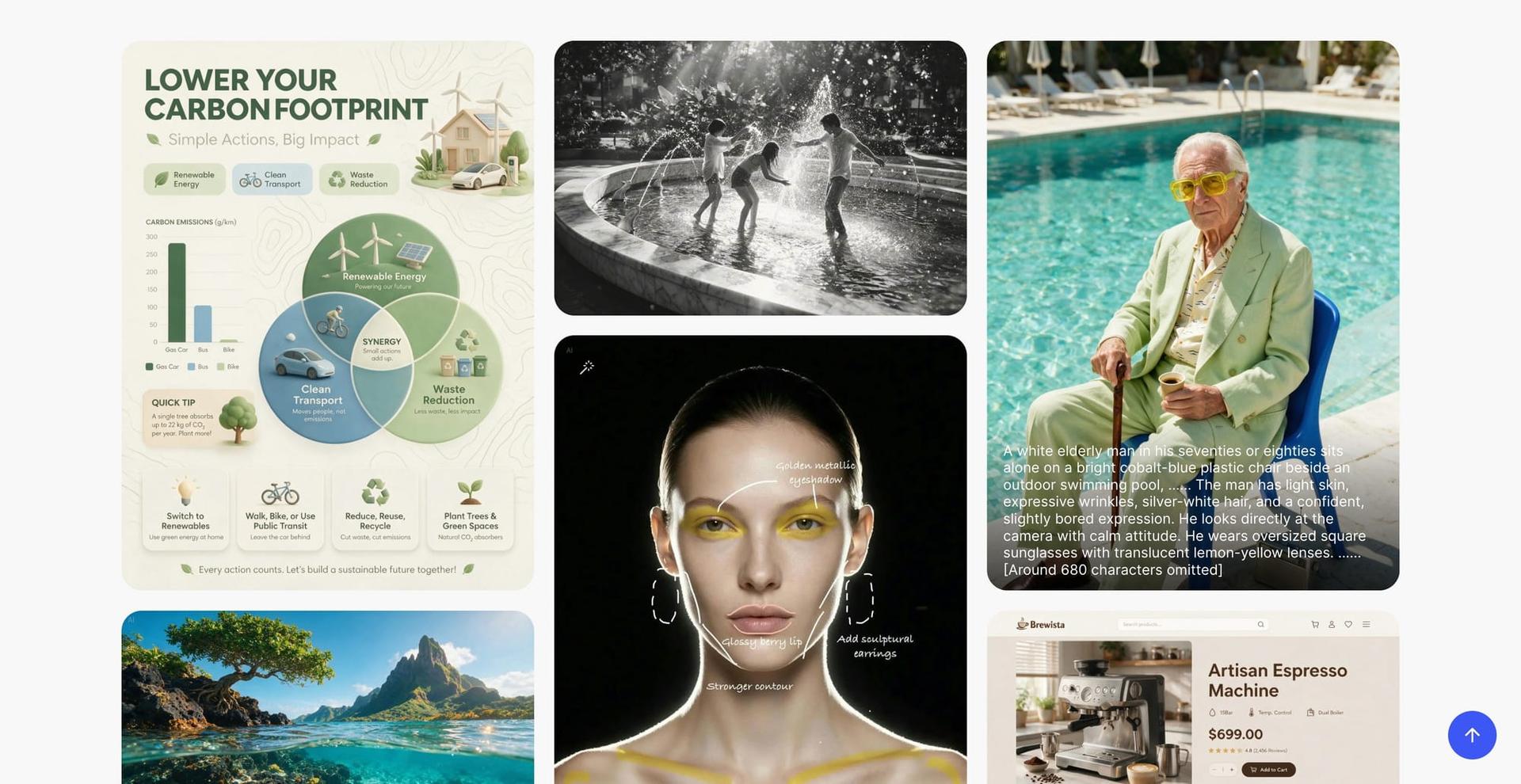
ByteDance has introduced Seedream 5.0 Pro, its latest multimodal image generation model, bringing advanced reasoning capabilities alongside precise editing tools and multilingual support. The release marks a notable step forward in ByteDance's push into generative image AI. It positions Seedream as a more capable and flexible option for a range of creative and practical use cases.

Meta launches Muse Image across its apps and previews Muse Video
Multimodal

Meta launches Muse Image across its apps and previews Muse Video

Meta has rolled out Muse Image, its in-house image generation model, across its family of apps including Instagram Stories, where users can create visuals from text prompts. The company also offered an early preview of Muse Video, signaling its intent to extend the capability to moving images. The moves mark a significant step in Meta's effort to embed generative media tools directly into its social platforms.

Google’s deepfake detector system used to debunk McConnell hoax pic
Image

Google’s deepfake detector system used to debunk McConnell hoax pic

A photograph appearing to show Kentucky Senator Mitch McConnell in severe medical distress circulated widely this week before being identified as AI-generated. Google's deepfake detection system played a central role in debunking the image, marking a notable real-world application of the technology.

6 Best Image Upscalers Tested: Photo Upscaling Without the Plastic Look
Image

6 Best Image Upscalers Tested: Photo Upscaling Without the Plastic Look

AI-powered image upscalers have matured to the point where enlarging a photo to 4K or 8K is largely a solved problem - the harder question now is whether the output still looks like a photograph. PetaPixel tested six leading tools to find out which ones preserve natural texture and which ones produce the telltale over-smoothed, plastic appearance. The results offer a practical guide for photographers choosing an upscaling workflow.

Google Photos Adds Video Remix That AI-Generates ‘Shareable Clips’
Video

Google Photos Adds Video Remix That AI-Generates ‘Shareable Clips’

Google Photos has introduced Video Remix, a new AI-powered feature that automatically generates short, shareable clips from a user's existing photo and video library. The addition is the latest in a string of generative AI tools Google has been folding into the app over the past year. It continues the company's broader push to embed AI assistance across its consumer software lineup.

Create shareable video clips in seconds with Video Remix in Google Photos.
Video

Create shareable video clips in seconds with Video Remix in Google Photos.

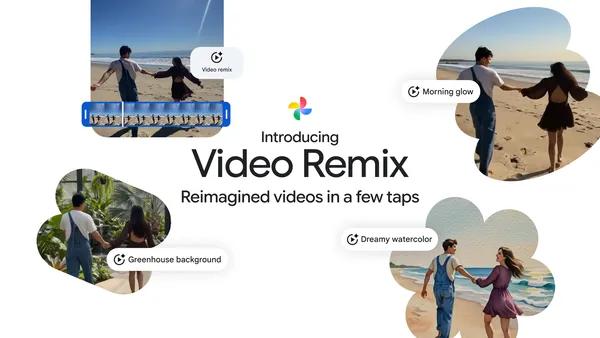
Google Photos has introduced Video Remix, a feature that turns existing video footage into polished, shareable clips with minimal effort. Using a few taps, the tool automatically selects highlights and applies edits to produce a finished video. It is designed to lower the barrier between raw footage and content worth sharing.

Google announces new 'Video Remix' feature its for AI subscribers
Video

Google announces new 'Video Remix' feature its for AI subscribers

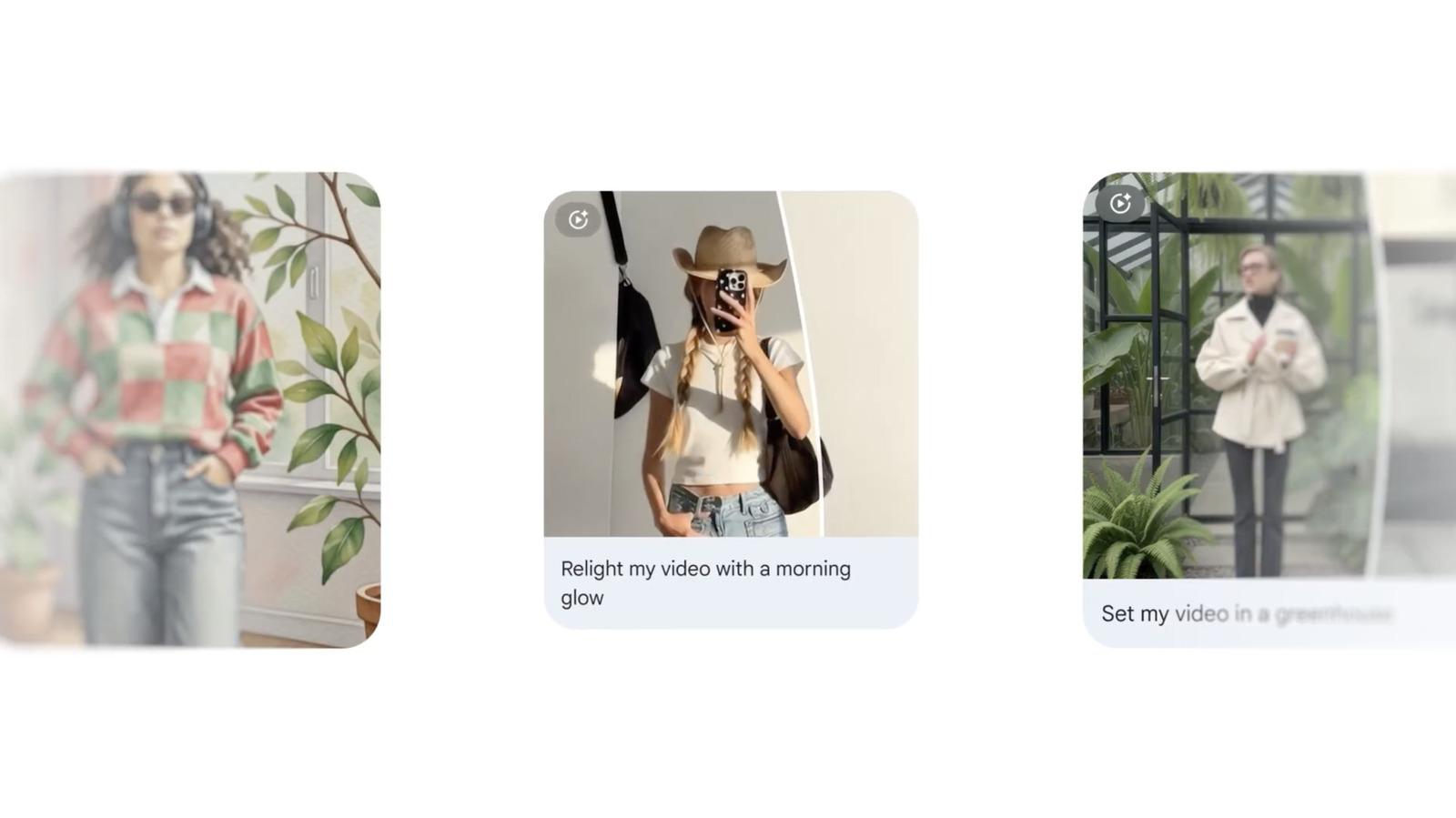
Google has introduced a Video Remix feature for its AI subscription tier, letting users transform videos stored in Google Photos using Gemini Omni. The tool offers a way to creatively reimagine existing footage rather than generating video from scratch. It represents Google's latest step in embedding generative AI capabilities directly into its consumer product ecosystem.

Meta’s New AI Image Generator Can Make Pictures From Anyone’s Public Instagram Page
Image

Meta’s New AI Image Generator Can Make Pictures From Anyone’s Public Instagram Page

Meta's Superintelligence Labs division has released its first image generation model, now rolling out across Instagram, WhatsApp, and the Meta AI app. One of its more notable features is the ability to generate images drawing from the content of any public Instagram profile. The move marks Meta's first significant push into first-party generative image tools at scale.

Muse Image is technically impressive, but Meta's use of Instagram photos raises questions
Image

Muse Image is technically impressive, but Meta's use of Instagram photos raises questions

Meta's Superintelligence Labs has released Muse Image, its first image generation model, which operates as an agent capable of refining its outputs through tools like code execution and web search. A standout feature allows users to generate images of real people by tagging their public Instagram profiles - without those individuals' consent. The opt-out approach is drawing scrutiny for its likely conflict with European privacy regulations.

LARPING: How Influencers Fake Being Rich
Image

LARPING: How Influencers Fake Being Rich

A growing number of social media influencers are using generative AI tools to fabricate the appearance of wealth - private jets, luxury hotels, and designer goods - without ever leaving home. Meanwhile, AI-generated fake products, including photorealistic flowers that don't exist, have flooded marketplaces like Etsy, eBay, and Amazon. The trend points to a broader and largely unregulated use of image AI to deceive consumers.

Video

NVIDIA’s Cosmos-Framework Tutorial: Designing a Colab-Friendly Miniature of Cosmos 3 World Models with Omnimodal Mixture-of-Transformers

NVIDIA's Cosmos 3 world models are powerful but demand hardware well beyond a typical laptop or free cloud notebook. This tutorial bridges that gap by building a compact, Colab-compatible stand-in that mirrors the real framework's structure - using an omnimodal Mixture-of-Transformers to jointly model text, vision, and action. It offers a hands-on way to understand how Cosmos 3 operates without needing access to the full model checkpoints.