gen‑ai.news

Archive, page 12

Every story we have published on generative image and video AI, newest first. 500 stories across 21 pages.

Looking for something specific? Search the archive · Browse by issue

xAI Sues Photographer, Blaming Him for Sexual Images Created With Grok
Image

xAI Sues Photographer, Blaming Him for Sexual Images Created With Grok

xAI has filed a lawsuit against an Arkansas photographer accused of using the Grok AI platform to generate sexually explicit images of minors from his client photographs. The company's legal action positions the user - not the platform - as the party responsible for the resulting material. The case raises pointed questions about liability in AI-generated content involving child exploitation.

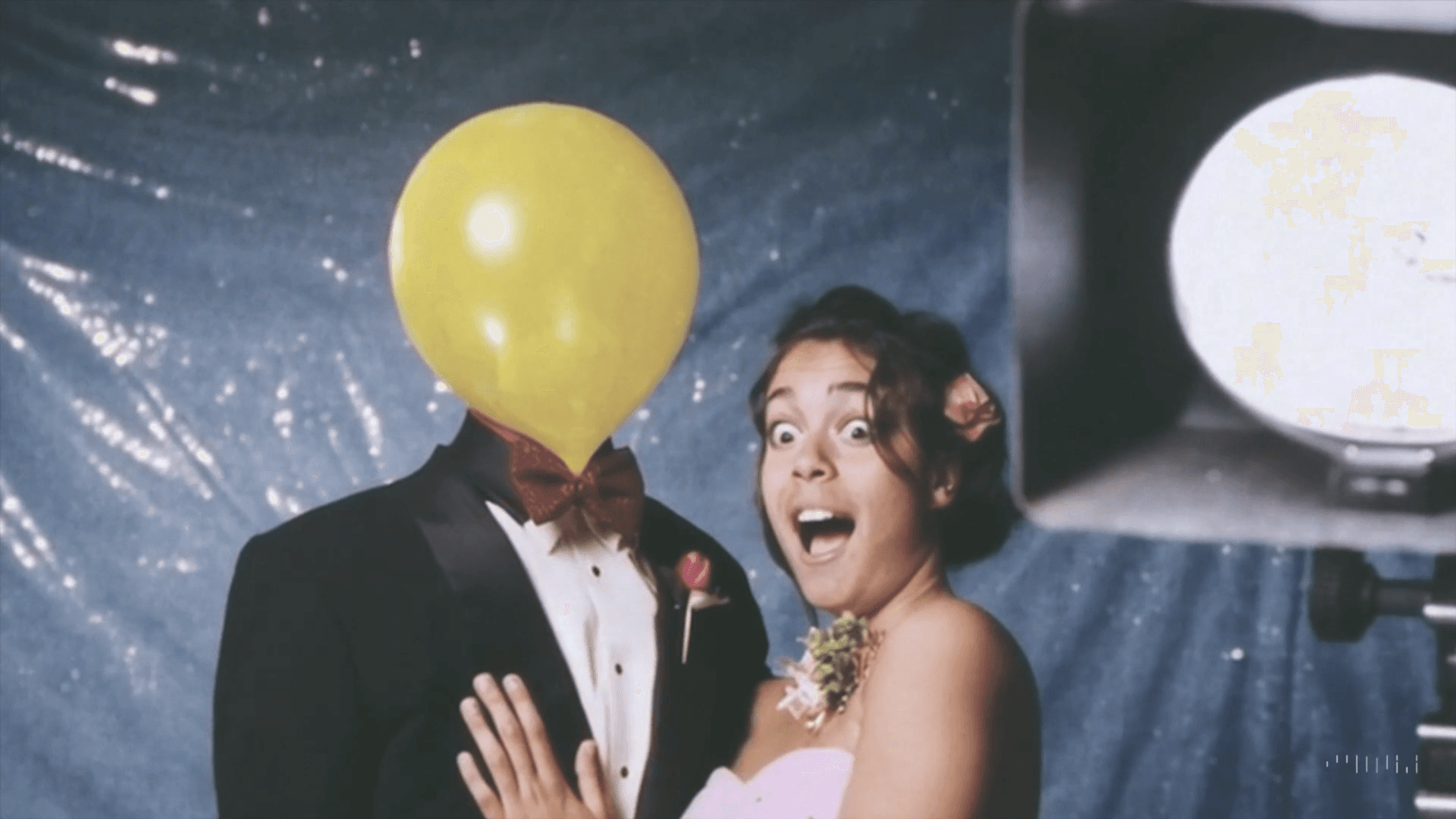
Photos of ‘Cat in the Hat Serial Killer’ Are AI-Generated, Police Say
Image

Photos of ‘Cat in the Hat Serial Killer’ Are AI-Generated, Police Say

Police in the U.K. and Ireland have had to issue public statements clarifying that images and videos depicting a "Cat in the Hat Serial Killer" are AI-generated and not real. The content, which spread widely online, showed a figure resembling the Dr. Seuss character in apparent crime-scene scenarios. Authorities were direct in their messaging, telling the public that "Cat in the Hat was not in your driveway."

Harvard’s $699 startup bootcamp offers AI avatars of its instructors
Multimodal

Harvard’s $699 startup bootcamp offers AI avatars of its instructors

Harvard Business School's new Foundry program is a $699 online startup bootcamp that uses AI avatars modeled on its instructors to give participants feedback during practice pitches and simulated board meetings. The approach moves AI-generated likenesses from novelty into a structured educational setting. It raises practical questions about how well synthetic instructor proxies can replicate the nuance of human mentorship.

World models that ignore human beliefs predict the wrong actions, new research shows
Video

World models that ignore human beliefs predict the wrong actions, new research shows

Current AI world models simulate physical environments but leave out a critical layer: what people believe, want, and intend. New research introduces a "Mental World Modeling" framework that adds these mental variables, and finds that even smaller models using it can outperform larger ones that ignore human psychology. The key bottleneck turns out to be modeling how physical and mental states evolve together over time.

Image

Building Agentic Document Intelligence Pipelines: Creating Scientific Figures with AutoFigure

AutoFigure is a toolkit that takes text descriptions and research paper content as input and produces publication-ready scientific figures. A new tutorial from MarkTechPost walks through the full setup process, from configuring an API-backed workflow to exporting styled diagram galleries. The piece is aimed at researchers and developers looking to automate the visual documentation side of document intelligence pipelines.

Changelog - 8/20/26
Image

Changelog - 8/20/26

Midjourney has pushed a round of updates to its alpha site, responding to two weeks of feedback from thousands of testers. The changelog reflects changes shaped directly by community input, both supportive and critical. Here is a look at what was addressed in this latest iteration.

Runway News | The Next Phase of Enterprise Video Generation
Video

Runway News | The Next Phase of Enterprise Video Generation

Runway's Chief Revenue Officer has distilled hundreds of enterprise conversations into five themes shaping how large organizations are approaching AI video generation. The piece covers everything from model consolidation and data sovereignty to shifting cost structures and the move toward autonomous execution.

Major YouTube creators are facing backlash for accepting AI money
Video

Major YouTube creators are facing backlash for accepting AI money

Several prominent filmmaking YouTubers, including Matti Haapoja and Sam "Kold" Kolder, have drawn criticism after posting sponsored content promoting Higgsfield's AI video platform without clearly disclosing the paid nature of those partnerships. The backlash intensified when other creators began sharing apparent screenshots of outreach from PR firms working on Higgsfield's behalf. The episode has sparked a broader conversation about transparency and trust in the creator community around AI tool

OpenAI's GPT-Image-2 can now generate images without a background
Image

OpenAI's GPT-Image-2 can now generate images without a background

OpenAI has added transparent background support to its GPT-Image-2 model, available in preview through the API. Rather than removing a background after the fact, the model bakes the alpha channel directly into the generation process. The feature is enabled with a single parameter.

Eddie AI Unveils a Specialized 9B Model Built for Private, Personalized Video Editing
Video

Eddie AI Unveils a Specialized 9B Model Built for Private, Personalized Video Editing

Eddie AI has announced a specialized 9-billion-parameter video editing model that trains privately for individual customers, keeping creative knowledge fully under their control. Built on a fine-tuned version of Qwen3.5-9B, the model achieves up to a 47% win rate against Kimi K3 on narrative arc identification - a result that puts it close to parity with a much larger general-purpose system. Its compact size also means it can run on standard GPUs and be deployed on-premises.

Subtlefakes: Slightly Altered Nonconsensual AI Images Are Taking Over X
Image

Subtlefakes: Slightly Altered Nonconsensual AI Images Are Taking Over X

A growing trend on X involves nonconsensual AI-generated images that have been subtly altered - tweaked just enough to evade automated detection while still being clearly identifiable as depicting real individuals. The technique is making moderation significantly harder and is spreading rapidly across the platform. 404 Media reports on how these so-called "subtlefakes" are changing the landscape of image-based abuse.

Exclusive: Early outputs of Muse Video model from Meta
Video

Exclusive: Early outputs of Muse Video model from Meta

Meta's Muse Video model has entered closed beta, offering early testers a look at its 10-second video generation capabilities. The model stands out for its native audio integration and reportedly strong temporal consistency across frames. These early outputs offer one of the first concrete glimpses into Meta's push into generative video.

Val Kilmer Resurrected by AI: ‘As Deep as the Grave’ Releases Seven Minutes of Footage Featuring Younger Version of Actor
Video

Val Kilmer Resurrected by AI: ‘As Deep as the Grave’ Releases Seven Minutes of Footage Featuring Younger Version of Actor

A new independent film, "As Deep as the Grave," has released seven minutes of footage featuring a digitally recreated younger Val Kilmer, constructed using generative AI trained on family archives and the actor's past performances. Director Coerte Voorhees drew heavily from Kilmer's work in "Heat" and "Batman Forever" to build the likeness. The project raises fresh questions about AI's role in preserving - or reanimating - the images of actors after death or incapacitation.

Meta ran ads for an app promising to nudify female politicians
Video

Meta ran ads for an app promising to nudify female politicians

Meta's advertising platform ran ads promoting an app that claimed to generate non-consensual nude images of female politicians, with at least one ad featuring explicit deepfake content resembling a sitting US politician. The incident raises renewed questions about how effectively major platforms screen AI-enabled content that targets real individuals. It is the latest example of generative image tools being weaponized for harassment and political targeting.

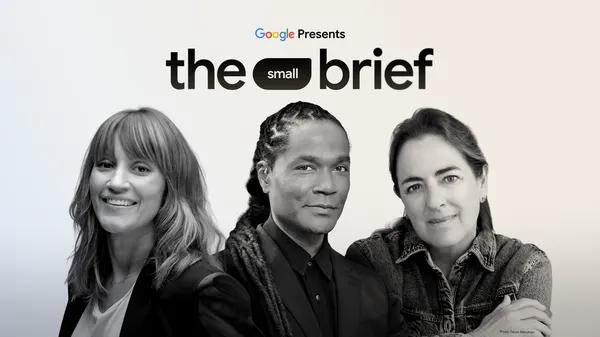
What 3 creatives built with unlimited access to Google Flow
Image

What 3 creatives built with unlimited access to Google Flow

Google gave three creative professionals unlimited access to Flow, its AI-powered creative studio, and asked them to build full campaigns for local businesses. The results offer a grounded look at how the tool performs in real-world, deadline-driven creative work. Here is what each of them produced and what the process revealed.

Robin Williams’ Instagram account brought back to fight ‘AI abuse’
Image

Robin Williams’ Instagram account brought back to fight ‘AI abuse’

Robin Williams' children have reactivated their late father's Instagram account, framing it as a direct response to the unauthorized use of his likeness by AI. Zak, Zelda, and Cody Williams say they want the profile to serve as a reliable, authentic space for preserving his memory. The move follows Zelda Williams' earlier and vocal opposition to AI-generated recreations of the actor.

How Populous Brings the World's Most Iconic Venue Designs to Life with Runway
Video

How Populous Brings the World's Most Iconic Venue Designs to Life with Runway

Populous, the architecture firm behind landmark venues like Wembley Stadium and the Las Vegas Sphere, has begun integrating Runway's generative video tools into its design workflow. The firm reports that the technology helps teams visualize large-scale venues before construction and has reclaimed roughly two weeks of time previously spent on competition pitches. It is a practical case study in how generative AI is finding a foothold in high-stakes architectural practice.

ByteDance and Hollywood Reach Agreement Over AI Video IP Rights
Video

ByteDance and Hollywood Reach Agreement Over AI Video IP Rights

ByteDance and the Motion Picture Association have signed an agreement covering copyright protections for the company's AI video and image models. The deal marks one of the more formal arrangements between a major generative AI developer and Hollywood's central industry body. Details of the licensing and compliance framework signal a broader shift in how studios are approaching AI-generated content.

The Future of Deepfakes and the Decline of Reality (With Hany Farid)
Video

The Future of Deepfakes and the Decline of Reality (With Hany Farid)

Hany Farid, one of the foremost researchers on synthetic media and digital forensics, sits down with 404 Media to discuss the trajectory of deepfakes - from their origins to where the technology is headed. The conversation covers how detection, policy, and public perception have struggled to keep pace with the rapid advancement of generative tools. It is a grounded look at what the erosion of verifiable reality means for individuals and institutions alike.

AI video market has bounced back from Sora's false start
Video

AI video market has bounced back from Sora's false start

What began as a wave of skepticism after OpenAI's Sora failed to immediately reshape filmmaking has given way to a maturing AI video industry with real commercial footholds. Companies like Promise are embedding themselves near Hollywood studios, Netflix is integrating AI tools across hundreds of titles, and startups in the space are commanding multi-billion-dollar valuations. The business infrastructure - job roles, revenue splits, and specialized vendors - is now catching up to the technology i

New benchmark confirms AI models still perform poorly at visual perception
Multimodal

New benchmark confirms AI models still perform poorly at visual perception

A new benchmark from Moonshot AI isolates visual perception from logical reasoning in multimodal models, and the results are sobering. No tested frontier model clears 60 percent accuracy, with GPT-4o leading by only a narrow margin. The findings suggest that many errors previously attributed to faulty reasoning may actually originate much earlier, at the point of reading the image itself.

Google will now allow users to remove visible watermarks from AI content
Image

Google will now allow users to remove visible watermarks from AI content

Google is updating its AI-generated content policy to let users remove visible watermarks from images and other media produced by its tools. The invisible SynthID watermark, however, will stay embedded in the content regardless. This marks a shift in how Google balances user flexibility with its underlying approach to AI provenance tracking.

You can now turn off Google Gemini’s visible watermarks
Multimodal

You can now turn off Google Gemini’s visible watermarks

Google has added a toggle in Gemini and its AI video tool Flow that lets users remove the visible "sparkle" watermark from AI-generated images, videos, and music. Even with the visible mark turned off, content will still carry invisible SynthID watermarks and C2PA metadata. The change affects content produced by Google's Nano Banana and Omni models.

Google will now allow users to remove visible watermark from its AI generations
Image

Google will now allow users to remove visible watermark from its AI generations

Google is giving users the option to remove the visible watermark that appears on AI-generated images and videos, responding to feedback from creators who found the branding intrusive. The change applies only to the visible mark - the invisible SynthID watermark, used to identify content as AI-generated, remains embedded regardless of the setting. It is a notable shift in how Google balances transparency with creative flexibility.