gen‑ai.news

Archive, page 13

Every story we have published on generative image and video AI, newest first. 500 stories across 21 pages.

Looking for something specific? Search the archive · Browse by issue

Tech Bro Scrapes Anti-AI Photo App Cara, Then Gloats About It
Image

Tech Bro Scrapes Anti-AI Photo App Cara, Then Gloats About It

Cara, a social platform built specifically to protect photographers from AI data scraping, has reportedly had its entire image library harvested by an outside actor. The incident is a pointed reminder that technical and policy-level protections do not always hold against determined scrapers. The person responsible apparently made their actions public, drawing sharp criticism from the creative community.


I looked inside an AI generated movie, and the best parts were all human
Video

I looked inside an AI generated movie, and the best parts were all human

A new short film produced with Higgsfield's AI video tools offers a rare look at what AI-assisted filmmaking actually looks and feels like in practice. The Verge went inside the production to find out where the technology helped - and where human craft still carried the weight. The result is a candid assessment of where generative video sits today.

How To Convert Or Upscale A Photo
Image

How To Convert Or Upscale A Photo

AI-powered upscaling tools have made it easier than ever to improve the resolution and clarity of older or low-quality photos. Engadget walks through some of the most accessible methods available today, from dedicated apps to built-in software features. Whether you are working with a scanned print or a compressed digital file, there are practical options that do not require professional editing skills.

Roku Created a New Channel That's Only AI Slop 24/7
Video

Roku Created a New Channel That's Only AI Slop 24/7

The Roku Channel has launched Fairground AI, a 24/7 linear channel running entirely on AI-generated content, including narrative shorts and commercials. The move raises real questions about audience appetite in Western markets, even as China's short-form AI video ecosystem already commands billions of views. Whether this is a glimpse of where streaming is headed, or a curiosity that quietly disappears, remains an open question.

Twitch streamers can now opt out from training Amazon’s AI
Multimodal

Twitch streamers can now opt out from training Amazon’s AI

Twitch has introduced an opt-out setting that lets streamers prevent their content - including streams, VODs, clips, chat logs, and channel images - from being used to train Amazon's generative AI models. The control applies to future training only and covers AI systems designed to generate or synthesize text, audio, images, or video. Non-generative AI features such as captions and safety tools are unaffected by the setting.

Insta360 Takes a Big Swing With Its Bold New X6 360° Camera Capable of 8K50p Video
Video

Insta360 Takes a Big Swing With Its Bold New X6 360° Camera Capable of 8K50p Video

Insta360 has announced the X6, its latest 360-degree action camera, featuring an 8K50p video recording capability built around a 1/1.1" sensor and a triple AI chip system. The camera also supports 6K60p, a Bullet Time mode at 8K100p, and 16K time-lapses, placing it at the higher end of the consumer 360-degree camera market. Pricing and full availability details have been released alongside the announcement.

Video

Xiaomi’s MiLM Plus Releases PROVE: Perception-Aligned Object Removal Metrics RC-S and RC-T With a Real-World Video Benchmark

Xiaomi's MiLM Plus research team has proposed PROVE, a new evaluation framework for video object removal that introduces two perception-aligned metrics - RC-S and RC-T - alongside a real-world benchmark dataset. The work addresses a growing mismatch between how well modern removal models perform and how poorly existing metrics capture that performance. Standard measures like PSNR, SSIM, and LPIPS regularly rank model outputs in ways that disagree with human judgment.

Video

The Video Production Stack Now Fits on One Desk: LTX-2.5 Launches as NVIDIA-Accelerated Open Weights World Model

LTX-2.5 is a new open-weights video generation model designed to run on consumer NVIDIA hardware, producing clips up to 6.8 seconds long with native multishot support. Lightricks released it with day-one ComfyUI integration, making it accessible to hobbyists and professionals working locally. The release positions capable video generation as something achievable without cloud infrastructure.

Google’s Gemini app surges to 1 billion users
Image

Google’s Gemini app surges to 1 billion users

Google has announced that its Gemini app has reached one billion users, marking a significant milestone for the company's AI assistant. Among those users, image generation has become a heavily used feature, with Gemini now producing more than 150 million images per day. Voice interaction is also prominent, with nearly two-thirds of users engaging the assistant through direct speech.

Apple could help you prove your iPhone photos aren’t deepfakes
Image

Apple could help you prove your iPhone photos aren’t deepfakes

Apple appears to be working on a feature called Apple Reference Image that would embed provenance metadata directly into photos at the moment of capture on an iPhone. The system is designed to help users demonstrate that a photo is genuine and not AI-generated. Code references for the feature have surfaced in the iOS 27 beta 5, though it is not yet live for users.

Claude will apply invisible watermarks to AI text and images
Multimodal

Claude will apply invisible watermarks to AI text and images

Anthropic has announced plans to embed invisible watermarks into text and images produced by Claude, making it easier for platforms and users to identify AI-generated content. The move is tied to European regulatory requirements around AI transparency. The changes are not yet live, but represent a formal commitment from the company.

Video

Implementing a MiniMax-H3 Multimodal Video and Audio Generation Pipeline with ComfyUI APIs

A new technical guide walks through building a fully programmable MiniMax-H3 pipeline using ComfyUI as a headless backend, covering everything from hardware profiling to joint video-audio decoding. The tutorial treats ComfyUI not as a visual tool but as an API-driven inference engine for multimodal generation. It offers a practical path for developers who want reproducible, automated workflows without relying on a graphical interface.

Mark Zuckerberg doesn’t understand how to live
Image

Mark Zuckerberg doesn’t understand how to live

The Verge takes a critical look at Mark Zuckerberg's vision for AI and what it reveals about a broader cultural trend - the outsourcing of meaning, motivation, and creativity to generative tools. Using a telling anecdote about an AI-generated motivational poster, the piece questions what is lost when personal expression is handed off to a machine. It is a thoughtful provocation aimed at the assumptions quietly baked into how AI is being sold to us.

Meta's 'open source' Muse Glimmer model can run on a single computer
Image

Meta's 'open source' Muse Glimmer model can run on a single computer

Meta has released Muse Glimmer, a new open-source generative image model designed to run on a single consumer computer rather than requiring large-scale cloud infrastructure. The lighter footprint makes the model more accessible to independent developers and researchers working outside of data center environments. It marks another step in Meta's ongoing push to distribute AI capabilities beyond proprietary, server-dependent systems.

Meta is back with Muse Glimmer: local, agentic, multimodal, and open source
Multimodal

Meta is back with Muse Glimmer: local, agentic, multimodal, and open source

Meta has released Muse Glimmer, an open-source multimodal AI system designed to run locally and operate with agentic capabilities. The model combines image understanding and generation with the ability to take multi-step actions, all without requiring a cloud connection. It marks Meta's latest push into accessible, on-device generative AI tools.

xAI launches Imagine Image 2.0 in Grok Quality Mode
Image

xAI launches Imagine Image 2.0 in Grok Quality Mode

xAI has updated its image generation tool inside Grok with the release of Imagine Image 2.0, available through the app's Quality Mode on both web and mobile. The update introduces a range of new capabilities including precise editing, smart resizing, and multi-reference image input. Workflow templates are also part of the release, aimed at streamlining repeated or complex image tasks.

Watching Roku’s AI channel is like eating from a trough
Video

Watching Roku’s AI channel is like eating from a trough

Roku has launched a 24/7 free ad-supported streaming channel dedicated entirely to AI-generated content, sourced from a startup called Fairground. The move marks one of the more visible attempts to bring generative video into mainstream living-room viewing. Whether audiences will warm to it is another question.

Adobe Is Coming for Canva With Expanded ChatGPT Integration
Image

Adobe Is Coming for Canva With Expanded ChatGPT Integration

Adobe has expanded its presence inside ChatGPT, moving beyond its initial Photoshop, Express, and Acrobat integrations to bring its entire suite of applications into OpenAI's conversational platform. The move positions Adobe more directly against Canva, which has built much of its recent growth on accessible, AI-assisted design tools. The unified plugin signals a deeper strategic bet on ChatGPT as a creative interface.

See what 5 builders are making with Gemini Omni
Video

See what 5 builders are making with Gemini Omni

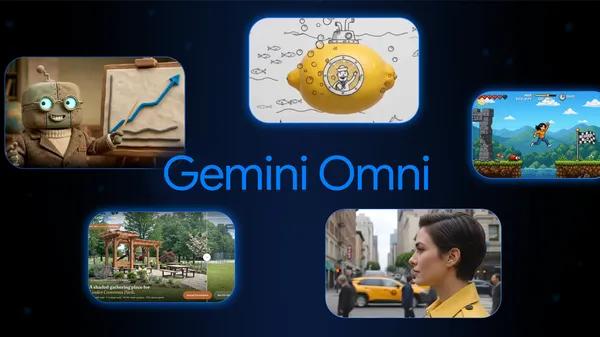
Google's Gemini Omni lets users generate and edit video through natural conversation, and a new spotlight from the company shows how five independent builders are putting that capability to practical use. The examples range from visualizing abstract ideas to streamlining video editing workflows. Together, they offer a concrete look at how conversational video AI fits into real creative and production work.

Adobe Announces It Is Further Integrating Into ChatGPT With New Unified Plugin
Multimodal

Adobe Announces It Is Further Integrating Into ChatGPT With New Unified Plugin

Adobe and OpenAI have deepened their existing partnership with a unified plugin that brings more than 70 Adobe tools directly into ChatGPT. The integration spans apps including Photoshop, Firefly, Premiere, Illustrator, and Acrobat, letting users describe a creative goal and have the AI orchestrate the appropriate tools to complete it. The plugin is available now for ChatGPT users, with guest access offered and fuller capabilities unlocked via an Adobe account sign-in.

Now that Generative AI Is the Villain, Luminar Is Spinning Its Messaging
Image

Now that Generative AI Is the Villain, Luminar Is Spinning Its Messaging

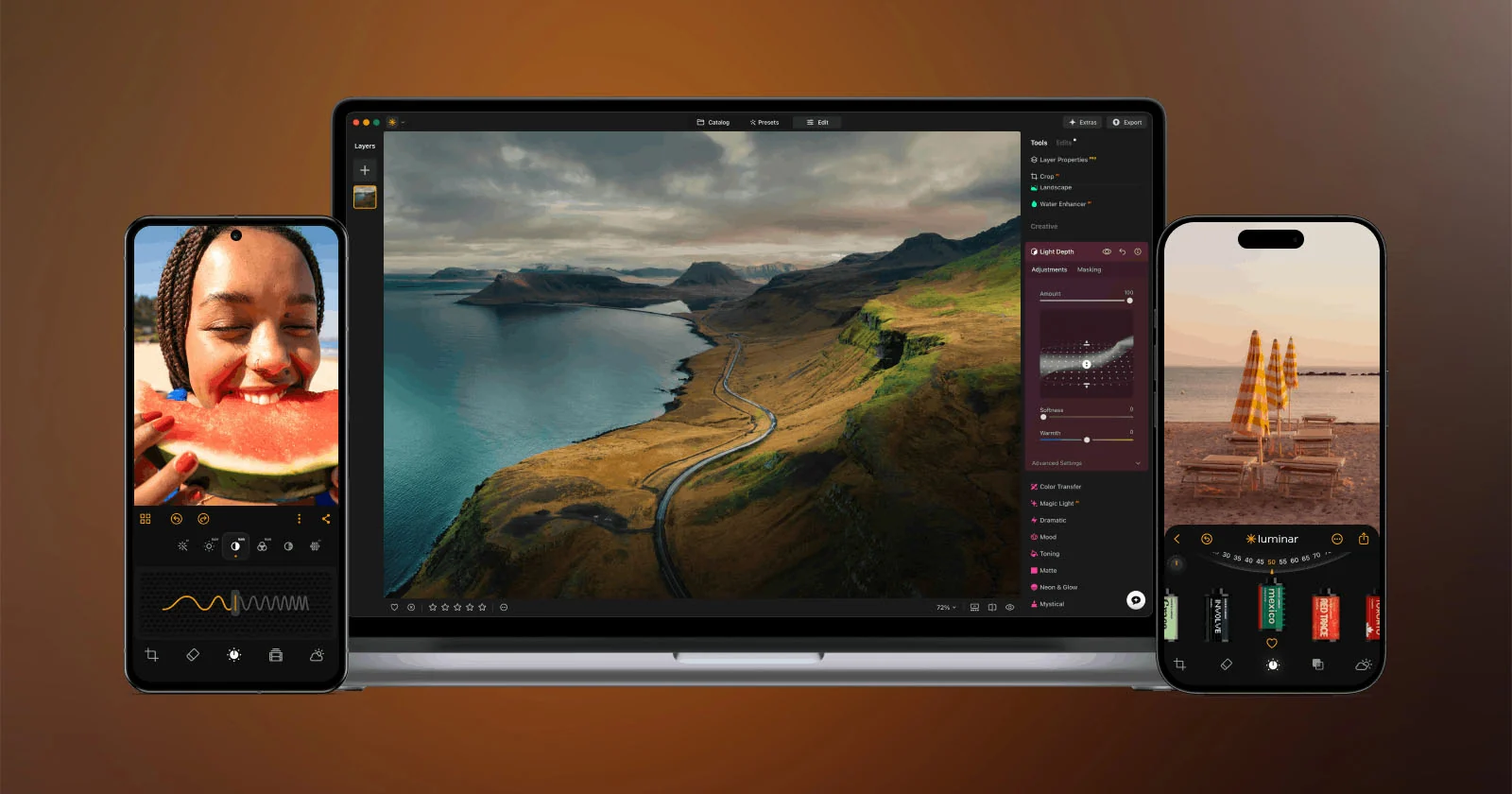
Skylum, the company behind Luminar, is adjusting how it talks about its AI-powered photo editing tools as public sentiment toward artificial intelligence grows more skeptical. Rather than leaning into AI as a selling point, the company is reframing its software around the idea of supporting human creativity. It is a notable shift for a brand that built much of its identity on being an AI-first editing platform.

Black Forest Labs makes FLUX 3 Video generally available and claims it beats Seedance 2.0
Video

Black Forest Labs makes FLUX 3 Video generally available and claims it beats Seedance 2.0

Black Forest Labs has moved FLUX 3 Video out of early access and into general availability, offering Full HD video generation with clips up to 20 seconds long. The model includes native audio output and lip-synced dialogue across more than 14 languages. According to BFL's own Elo benchmark rankings, it outperforms both Gemini Omni Flash and Seedance 2.0.

Car Photography Company Sues Midjourney for Allegedly Copying Thousands of Its Photos
Image

Car Photography Company Sues Midjourney for Allegedly Copying Thousands of Its Photos

A car photography company has filed a lawsuit against Midjourney, alleging the AI image generator used tens of thousands of its copyrighted vehicle photos as training data without authorization. The case adds to a growing body of copyright litigation targeting generative AI companies over their use of unlicensed visual material. It is one of the more focused suits in the space, centering on a single industry's photographic catalog rather than a broad coalition of creators.