gen‑ai.news

Archive, page 14

Every story we have published on generative image and video AI, newest first. 500 stories across 21 pages.

Looking for something specific? Search the archive · Browse by issue

ByteDance launches SeedRealtime full-duplex AI model
Multimodal

ByteDance launches SeedRealtime full-duplex AI model

ByteDance has released SeedRealtime, a full-duplex multimodal model that handles audio, video, and text within a single unified system. Unlike turn-based conversational AI, it supports continuous, overlapping dialogue with natural timing and proactive responses. The model represents a step toward more fluid human-computer interaction without the stop-and-start feel of earlier voice interfaces.


Mistral releases Shieldstral for multimodal moderation
Multimodal

Mistral releases Shieldstral for multimodal moderation

Mistral has released Shieldstral, a 3-billion-parameter open-weights multimodal safety classifier designed to moderate text, images, and combined text-image content. The model is built for customizability, giving developers and organizations direct control over how moderation policies are applied. Its open-weights nature means it can be deployed and adapted without relying on a hosted API.

Court Rejects xAI Bid to Block Minnesota Law Targeting AI 'Nudify' Apps
Image

Court Rejects xAI Bid to Block Minnesota Law Targeting AI 'Nudify' Apps

A federal judge has declined xAI's request for a preliminary injunction to stop a Minnesota law banning AI-powered 'nudify' applications from taking effect. The ruling allows the state's restrictions on non-consensual AI-generated intimate imagery to stand while litigation continues.

Multimodal

Evaluating Multimodal Vision Models with Moonshot PerceptionBench Using Robust Data Loading and Automated Judging

Moonshot's PerceptionBench offers a structured way to measure how well multimodal vision models handle fine-grained visual tasks, from OCR and object counting to depth understanding and hallucination detection. A new tutorial walks through building a complete evaluation pipeline, including environment setup, dataset loading, and automated answer judging. The workflow is designed to run in Google Colab, making it accessible for researchers without dedicated infrastructure.

xAI Fails to Block Minnesota Law Targeting AI Nudification Apps
Image

xAI Fails to Block Minnesota Law Targeting AI Nudification Apps

A federal judge has denied xAI's request for a preliminary injunction against a Minnesota law banning apps that generate non-consensual intimate imagery. The ruling allows the law to take effect while xAI's broader legal challenge continues.

Photography Gallery’s Decision to Exhibit AI Images Sparks Anger
Image

Photography Gallery’s Decision to Exhibit AI Images Sparks Anger

A Belfast photography gallery has drawn criticism from photographers and the wider arts community after hosting an exhibition that included AI-generated images alongside traditional photographic work. The decision has reignited longstanding debates about whether AI-generated imagery belongs in spaces dedicated to photography. Critics argue that exhibiting such work under a photography banner misrepresents the medium and devalues the craft of working photographers.

Google Earth Pulls AI Image Generator After Users Created Misleading Images
Image

Google Earth Pulls AI Image Generator After Users Created Misleading Images

Google Earth quietly removed its newly integrated Nano Banana AI image generator just days after launch, following reports that users were producing misleading images with the tool. The feature had only just been covered in the press when Google moved to pull it, suggesting the decision was a rapid response to early misuse.

China's MiniMax H3 is the first open model to top an AI video ranking
Video

China's MiniMax H3 is the first open model to top an AI video ranking

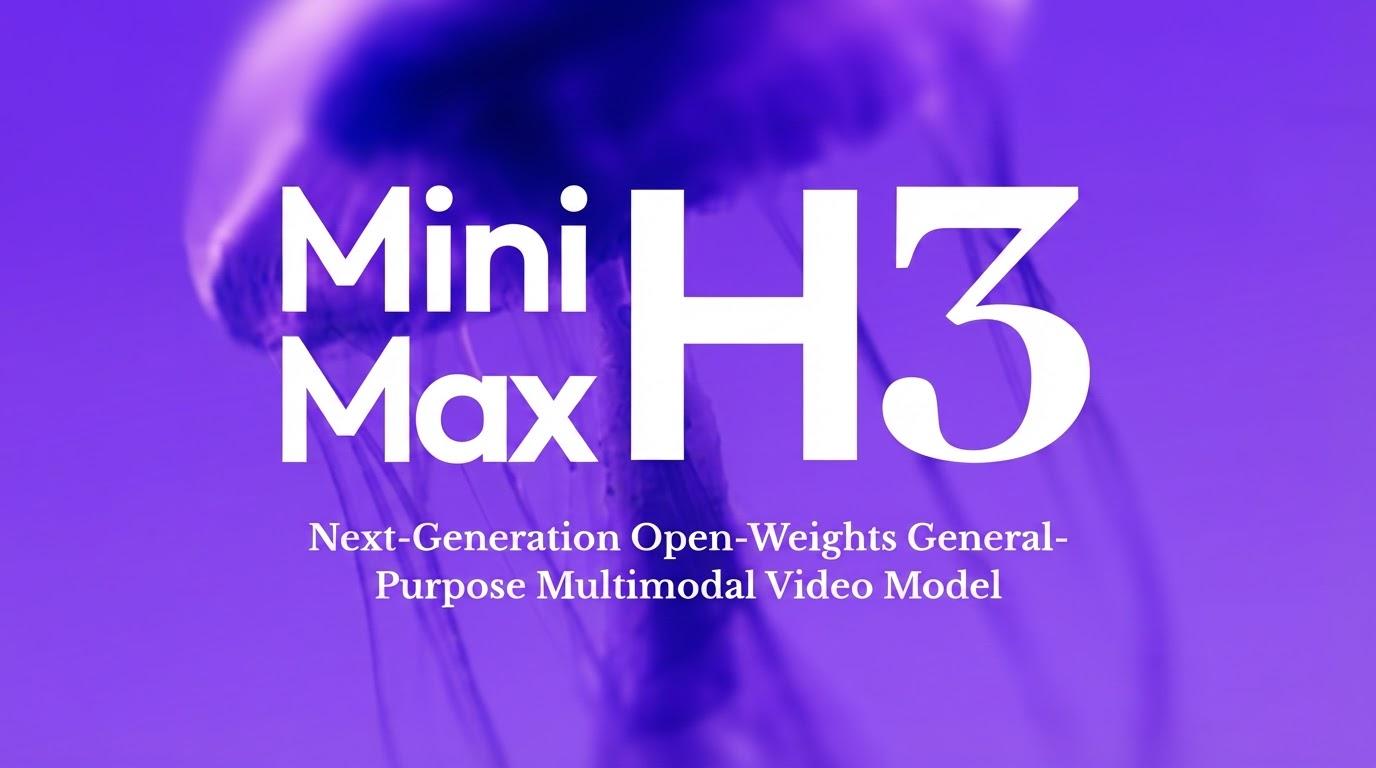
Chinese AI company MiniMax has released the weights for its H3 video generation model, marking the first time an open model has claimed the top spot on a major AI video benchmark ranking. The release is a notable moment for the open-source side of the generative video space, which has largely been outpaced by proprietary offerings from companies like OpenAI, Google, and Sora competitors. H3's rise to the top of the leaderboard signals that the gap between closed and open video models may be narr

Multimodal

Alibaba Qwen Releases Qwen3.8-Max: A 2.4 Trillion Parameter MoE Model and the Most Capable One in the Qwen Family to Date

Alibaba's Qwen team has moved Qwen3.8-Max from preview to general availability, marking it as the most capable model in the Qwen lineup to date. The mixture-of-experts model carries 2.4 trillion parameters and supports text, image, and video input over a 1 million-token context window. Open weights are expected to follow next week.

Image

A Tutorial on GeoAI: Designing Footprint Extraction from NAIP Imagery Using U-Net, Grounding DINO, SAM, and Mask R-CNN

A new tutorial walks through a complete GeoAI pipeline for extracting building footprints from high-resolution NAIP aerial imagery, combining classical deep learning with newer vision models. The workflow covers everything from environment setup and data preparation to training and inference across four distinct model architectures. It offers a practical reference for anyone working at the intersection of geospatial analysis and generative or segmentation-based AI.

Is paying artists enough to convince them to embrace AI?
Video

Is paying artists enough to convince them to embrace AI?

A new wave of AI startups is attempting to address longstanding concerns from the illustration community by compensating artists whose work is used in model training. Pippa is one such company, positioning itself as a more ethically grounded alternative to competitors that have trained on unlicensed work. Whether financial compensation alone is enough to shift artist sentiment remains an open question.

Snap and LinkedIn are fighting back against a flood of low-quality AI content
Video

Snap and LinkedIn are fighting back against a flood of low-quality AI content

Snap and LinkedIn are both taking steps to curb the spread of low-effort AI-generated content on their platforms. Snap is blocking AI-generated videos from its Spotlight feed, while LinkedIn has introduced a dedicated reporting option for what many users call "AI slop." The moves reflect growing pressure on social platforms to maintain content quality as generative AI tools become more accessible.

Judge denies xAI’s request to block Minnesota ban on ‘nudify’ apps
Image

Judge denies xAI’s request to block Minnesota ban on ‘nudify’ apps

A federal judge has denied xAI's request to block a Minnesota law targeting so-called "nudify" apps, allowing the state's ban to remain in effect. The ruling is a setback for xAI, which had challenged the law on legal grounds. The case adds to a growing body of litigation around state-level regulation of generative AI tools.

Is this Billboard Hot 100 hit AI slop?
Image

Is this Billboard Hot 100 hit AI slop?

Fenix Flexin, known as a member of Los Angeles rap duo Shoreline Mafia, has a solo track climbing the Billboard Hot 100 - but listeners and critics are questioning whether "Rubberz" was generated by AI. The song marks a sharp stylistic departure from his usual trap-influenced West Coast sound, fueling speculation. Fenix has denied the claims while doing little to address the specific concerns raised.

Judge refuses xAI's request to stop a Minnesota law banning 'nudify' apps
Image

Judge refuses xAI's request to stop a Minnesota law banning 'nudify' apps

A federal judge has declined xAI's request to block a Minnesota law targeting so-called "nudify" apps, which use AI to generate non-consensual nude imagery. The ruling allows the law to remain in effect while the broader legal challenge proceeds. xAI had filed the lawsuit just days before seeking the emergency injunction.

ByteDance's Seedance 2.5 generates 30-second video clips with built-in audio
Video

ByteDance's Seedance 2.5 generates 30-second video clips with built-in audio

ByteDance has released Seedance 2.5, an AI video model capable of generating clips up to 30 seconds long with audio produced in the same pass. The model accepts a wide range of reference inputs, including images, videos, and audio files. For production workflows that currently involve stitching together many short segments, this could meaningfully reduce the steps involved.

xAI adds character references and 1080p to Imagine Video 1.5
Video

xAI adds character references and 1080p to Imagine Video 1.5

xAI has updated its Imagine Video model to version 1.5, adding support for character and voice references, prompt-only generation, and native 1080p output. The update gives users more control over how characters look and sound across generated clips. Multi-reference inputs are also now supported, allowing several reference elements to be combined in a single generation.

Google handed users the easiest possible tool for fake satellite imagery, then pulled it after two days
Image

Google handed users the easiest possible tool for fake satellite imagery, then pulled it after two days

Google quietly removed its Nano Banana 2 image generation model from Google Earth just two days after launch, following demonstrations of how easily it could produce convincing fake satellite imagery. A straightforward text prompt was enough to populate an empty lot near the Mexican border with a fabricated column of refugees - highlighting the real-world risks of pairing generative AI with geospatial tools.

Video

MiniMax Releases MiniMax H3: An Omni-Modal Video Model That Generates 15-Second 2K Clips With Native Stereo Audio

MiniMax has released H3, a multimodal generation model that treats text, images, video, and audio as a single unified context rather than bolting audio onto a video pipeline. Outputs run up to 15 seconds at 2K resolution with native stereo sound included. The model positions itself as a general-purpose tool rather than a narrowly scoped text-to-video system.

Gemini for macOS adds new "Speak to Window" feature
Image

Gemini for macOS adds new "Speak to Window" feature

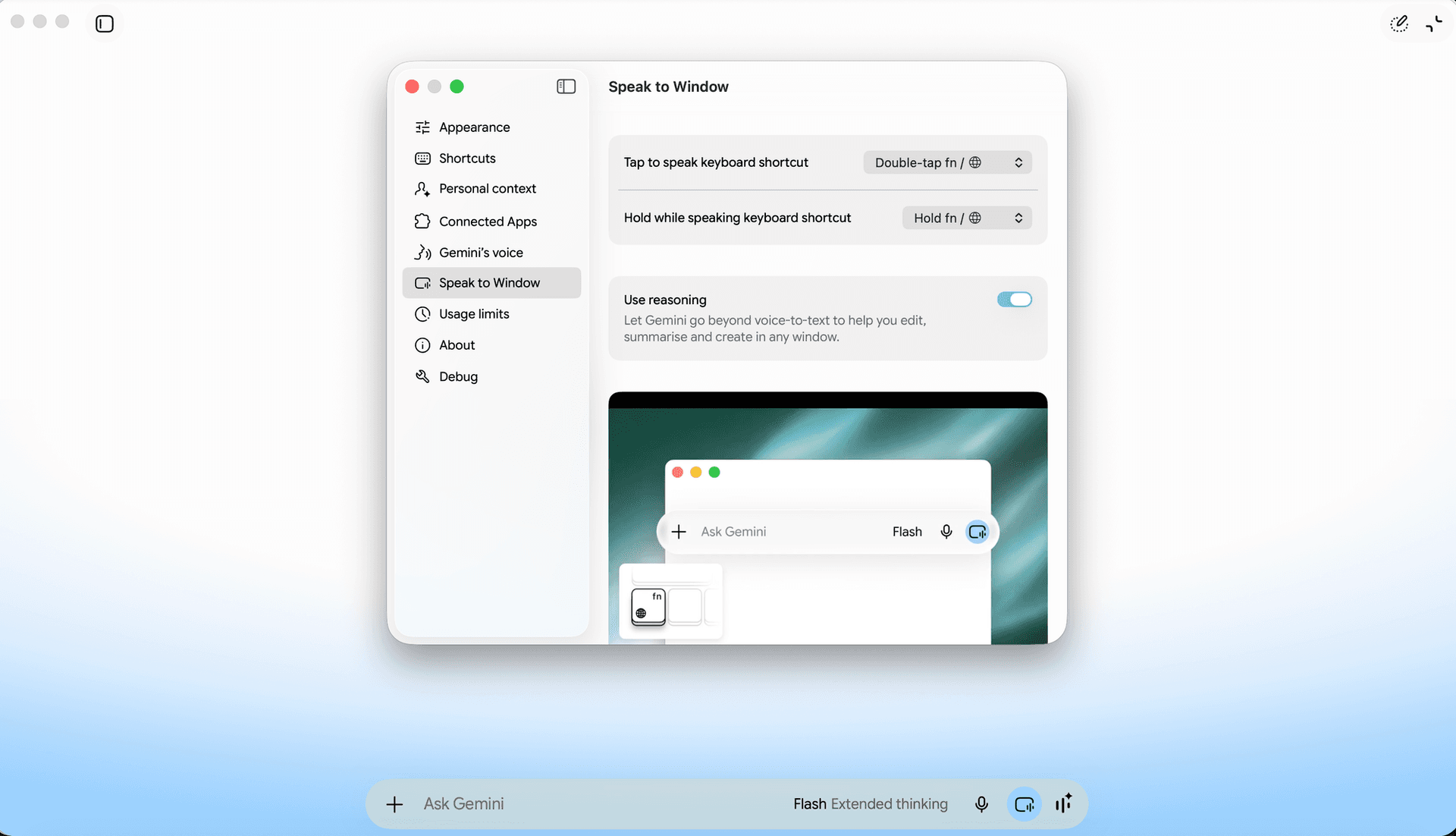
Google's Gemini desktop app for macOS has gained a "Speak to Window" feature, letting users dictate and refine text, rewrite selections, and summarize content directly from any open window. The update also extends image editing capabilities to the desktop environment. It represents a meaningful expansion of Gemini's voice and editing tools beyond the browser.

Google nixes its Earth AI feature one day after launch, amid criticism it would spread misinformation
Image

Google nixes its Earth AI feature one day after launch, amid criticism it would spread misinformation

Google has pulled an AI feature tied to Google Earth less than 24 hours after its release, following swift public criticism that it could be used to fabricate and spread false geographic imagery. The tool let users generate AI-created visuals and layer them directly over real satellite map data. The rapid reversal highlights the ongoing tension between rolling out generative AI features quickly and anticipating their potential for misuse.

Google Earth’s AI deepfake tool only lasted one day
Image

Google Earth’s AI deepfake tool only lasted one day

Google pulled an AI image-editing feature from Google Earth less than 24 hours after launching it, following concerns that it could be used to fabricate misleading depictions of real-world locations. The tool allowed users to alter satellite imagery with text prompts, raising immediate questions about its potential for misuse. Google had initially pointed to watermarking and content filters as safeguards, but those measures proved insufficient to prevent the backlash.

Snapchat is cracking down on AI slop in Spotlight
Video

Snapchat is cracking down on AI slop in Spotlight

Snapchat is pulling AI-generated videos from its Spotlight recommendation feed, marking one of the more direct moves by a major social platform to limit the spread of synthetic content in public discovery surfaces. The change targets the low-effort, algorithmically churned material that has become common across short-video platforms. Creators who use AI tools will still be able to post, but their content will no longer surface to users who haven't chosen to follow them.

Google rolls back the needless AI generation tools it added to Google Earth
Image

Google rolls back the needless AI generation tools it added to Google Earth

Google has quietly removed AI image generation tools it had added to Google Earth, pulling the feature less than a day after it went live. The tools drew criticism for making it easy to produce misleading satellite-style imagery. The swift reversal suggests the rollout was not fully thought through before it reached users.